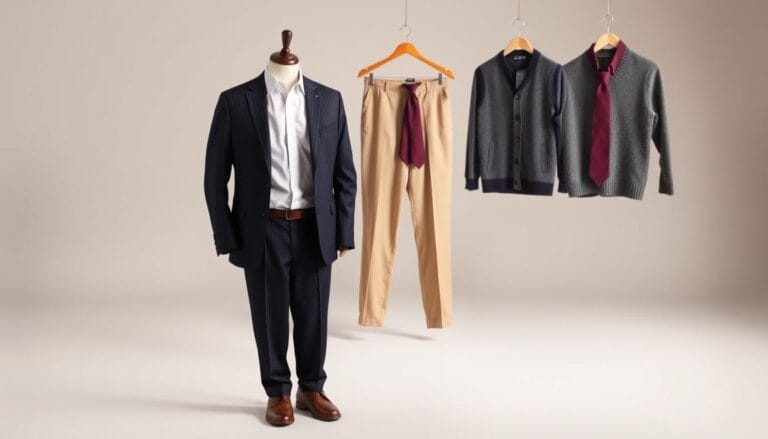
Feeling underdressed or overdressed at work can be frustrating. What if you could find the perfect business casual look? This look should show respect and keep you feeling great.
Mastering men’s business casual isn’t just about looking good. It’s about feeling confident in any professional setting. Our guide will show you the 10 must-have items for a stylish work look.
FREE TOOL FOR THIS TOPIC
Business Casual Outfit Builder
Built specifically for readers of 10 Must-Have Business Casual Essentials for Men: The Best Complete Style Guide. Answer four quick questions to receive a focused result immediately—no email required.
Business Casual Outfit Builder
Build a workplace-ready outfit in less than a minute.
Continue building your career
Use another free CareersForge resource to turn this result into your next application, resume or interview step.
Business casual has changed from a strict rule to a flexible, modern style. We’ll teach you how to build a wardrobe that fits any work setting. This includes tech startups and traditional offices.



Whether you’re new to the workforce or looking to update your style, this guide is for you. It will help you dress smart, feel comfortable, and make a strong impression.
Table of Contents
Understanding Modern Business Casual Evolution
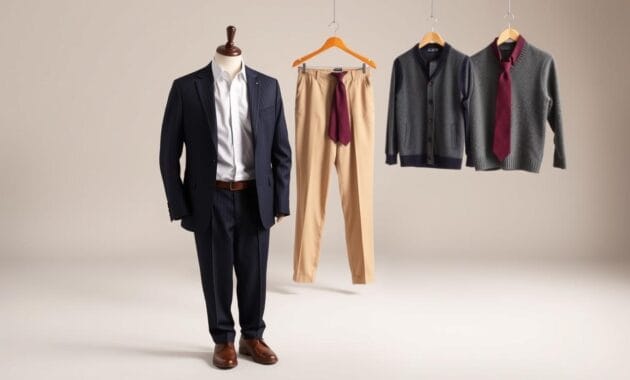
The world of men’s professional casual outfits has changed a lot in recent years. What was once a strict dress code has become more flexible and personal. Now, people can choose what they wear to work based on their own style.
Origins of Business Casual
Business casual started in the 1960s, shaking up old dress code rules. Companies began to try out more relaxed dress codes, starting with “Casual Fridays.” This big change moved away from the old suit-and-tie rule.
- 1960s: First appearance of relaxed dress codes
- 1970s: Gradual acceptance of less formal workplace attire
- 1980s: Growing trend towards comfortable professional clothing
Need more details on footwear? Shoes can make or break these essentials. Make sure you are pairing them correctly by reading our specific guide on Acceptable Business Casual Shoes for Men.
Unsure about the rules? If you are still confused about the overall dress code, check our complete breakdown of What Is Business Casual for Men? to ensure you are always on point.
The Tech Industry Influence
In the 1990s, Silicon Valley changed men’s office wear. Tech companies ditched old dress codes for comfort and personal style. People started wearing casual shirts, comfortable pants, and sneakers to work, setting a new trend.
Post-Pandemic Shift in Workplace Attire
The COVID-19 pandemic made work clothes even more flexible. With more people working from home, the line between work and casual wear got blurred. Now, people look for clothes that work well in both places.
This change shows a bigger cultural move. It’s about valuing comfort, personal style, and practicality in work clothes.
What Exactly Is Business Casual in Today’s Workplace
Understanding business casual in 2023 means grasping the balance between style and comfort. It’s about dressing professionally but feeling relaxed at work.
Business casual is a smart way to dress that’s between formal and casual. For men, it’s about picking clothes that show you’re competent but also comfortable.
- Avoid overly formal suits and rigid dress codes
- Prioritize well-fitted, clean-lined clothing
- Choose versatile pieces that transition between meetings and collaborative spaces
The main traits of business casual are:
- Polished appearance without strict corporate uniformity
- Clothes that reflect individual personality
- Adaptability to different workplace environments
Different jobs see business casual in their own way. Tech companies might be more laid-back, while finance is a bit more formal. Knowing your workplace culture is key when choosing your outfit.
Today’s business casual is about being comfortable, functional, and true to yourself. It’s about looking professional but feeling like you’re being your best self at work.
The Perfect Business Casual Wardrobe Foundation
Creating men’s office-friendly casual looks needs careful planning and picking. A well-chosen business casual wardrobe makes you look professional and stylish. We’ll show you how to build a wardrobe that shows off your style.
Core Wardrobe Pieces
Your men’s polished yet comfortable styles begin with basic pieces. These pieces help you mix and match outfits. Essential items include:
- Tailored blazers in neutral colors
- Crisp button-down shirts
- Quality chinos in versatile shades
- Comfortable dress shoes
- Classic sweaters for layering
Color Coordination Basics
Choosing the right colors makes your business casual wardrobe stand out. Stick to colors that go well together. Navy looks great with khaki, and gray is super versatile.
Fabric Selection Guidelines
The fabric you choose affects both how you feel and how you look. Opt for breathable materials like cotton, wool blends, and lightweight merino. These keep you cool and stylish all day. Also, pick wrinkle-resistant fabrics to stay sharp without extra effort.
Building a business casual wardrobe is about quality over quantity. Focus on pieces that work well together.
10 Must-Have Business Casual Essentials for Men
Creating the perfect men’s transitional work-to-evening outfits needs careful planning. The right 10 must-have business casual essentials for men can change your professional look. They offer versatility and confidence in any setting.
Professional men know a well-curated wardrobe says a lot. Let’s explore the key pieces to boost your business casual style:
- Button-Down Shirts: Crisp, well-fitted shirts in neutral colors like white, light blue, and soft pastels
- Tailored Blazers: Versatile jackets that instantly polish any outfit
- Chinos and Khakis: Comfortable yet sophisticated pants in classic colors
- Dark Wash Jeans: Premium denim that bridges casual and professional styles
- Quality Leather Shoes: Oxfords and loafers that complement multiple outfits
- Merino Wool Sweaters: Lightweight layers for temperature control
- Polo Shirts: Smart casual options for relaxed work environments
- Neutral Colored Cardigans: Elegant layering pieces
- Tailored Slacks: Dress pants for more formal business settings
- Lightweight Jackets: Transitional outerwear for changing temperatures
Building a business casual wardrobe is about quality over quantity. These essentials allow for many outfit combinations. This ensures you’re ready for any professional situation.
Invest in quality fabrics and classic cuts. Your wardrobe should show your personal style while keeping a polished look. The aim is to create men’s transitional work-to-evening outfits that boost your confidence.
The navy blazer is perhaps the most versatile piece in this list. Originally derived from naval uniforms, the blazer has transitioned from a formal maritime jacket to the cornerstone of the modern gentleman’s wardrobe.
Mastering Business Casual Shirts and Tops
Choosing the right shirts and tops is key for a polished look. The right pieces can make your office attire stand out. Your top choices will define your professional style.
Professional men have many options for their business casual wardrobe. It’s important to know how different shirt styles show your personal brand at work.
Button-Down Shirts: The Versatile Staple
Button-down shirts are a must-have for men’s business casual. They are versatile and professional. When picking button-downs, remember these important points:
- Fit: Tailored but not tight
- Fabric: Breathable cotton or cotton blends
- Colors: Neutral tones and subtle patterns
Polo Shirts: Casual Professionalism
Polo shirts are great for mixing formal and casual. They fit well in creative and relaxed work settings.
| Polo Shirt Style | Best Workplace Environment | Recommended Pairing |
|---|---|---|
| Solid Color | Tech Startups | Chinos or Dark Jeans |
| Subtle Stripe | Marketing Agencies | Tailored Trousers |
| Neutral Tone | Consulting Firms | Blazer and Dress Pants |
Quality Sweaters: Layering with Sophistication
Sweaters add warmth and style to your outfits. Invest in high-quality knits that match your wardrobe. Merino wool and cashmere blends are both comfortable and stylish.
- Crew neck for classic look
- V-neck for layering
- Cardigan for additional versatility
Essential Trousers and Pants Options
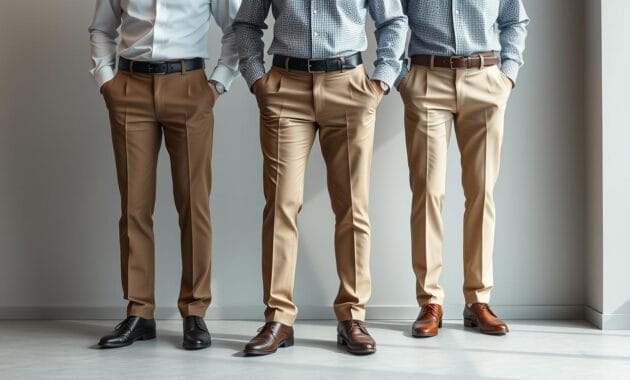
Choosing the right trousers is key for great men’s professional casual outfits. The right pants can make your business casual look stand out. It adds a touch of sophistication to your work style.
For men’s smart casual work clothes, pick trousers that are both comfortable and professional. Chinos are the top choice for business casual bottoms. They work well in many work settings.
- Chinos in neutral colors like khaki, navy, and stone
- Slim-fit dress pants with minimal pattern
- Dark wash jeans without distressing
- Wool trousers for colder seasons
- Corduroy pants for textured variety
The fabric you choose is very important. Cotton blends keep you cool, while wool keeps you warm. Choose materials that stay crisp and wrinkle-free. This ensures you look sharp all day.
Fit is also very important in men’s professional casual outfits. Your trousers should fit well, not too tight or too loose. They should have a tailored look that shows you pay attention to detail.
Pro tip: Get versatile pants that work in different work places. A good pair of chinos or dress pants is the base of your smart casual wardrobe.
Did You Know? The structure of the classic men’s blazer is so iconic that it has crossed over into women’s high fashion. The “Oversized” look borrows directly from these essential menswear proportions.
If you are interested in how this staple piece is being styled globally this year, read our guide on How to Style Oversized Blazers (2026 Trends).
Footwear Fundamentals for Business Casual Success
Choosing the right shoes is key for men’s casual wear that works in both work and play. The right shoe can make or break your outfit, making it a must-have for business casual looks.
Finding the right business casual shoes is all about style and what’s right for the office. Men need to pick shoes that are both comfortable and professional, showing off their personal style.
Leather Dress Shoes: The Professional Foundation
Leather shoes are the heart of professional footwear. Here are some must-haves:
- Oxford shoes in neutral colors like black and brown
- Sleek loafers with minimal embellishments
- Burnished leather brogues for subtle visual interest
Business Casual Boots: Sophisticated Edge
Boots are a stylish choice instead of traditional dress shoes. Chukka boots and Chelsea boots are great for adding a touch of class, perfect for cooler months.
Smart Sneakers: Modern Workplace Comfort
Today’s workplaces are more open to sneakers. Look for:
- Clean, uncluttered leather or suede construction
- Neutral color palettes
- Sophisticated silhouettes
Choosing the right shoes can take your casual wear from good to great. It ensures you look sharp and professional in any business casual setting.
Outerwear and Layering Pieces
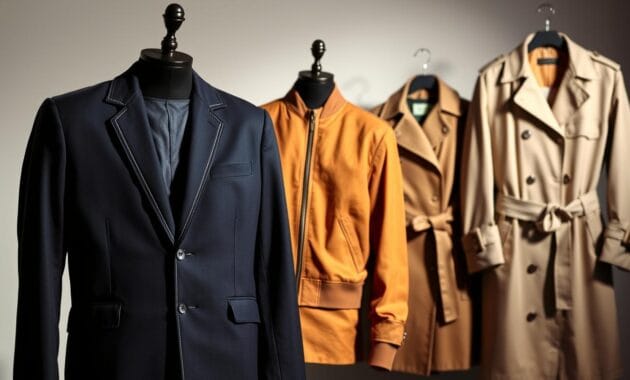
Creating men’s transitional work-to-evening outfits starts with choosing the right outerwear. The right pieces can change your look from professional to stylish and comfortable.
Blazers are key to business casual style. Look for ones that work well in both office and evening settings. Navy, charcoal, and subtle plaid are great choices because they fit in anywhere.
- Single-breasted wool blazers
- Lightweight cotton-blend jackets
- Unstructured sport coats
Cardigans are also great for layering. Pick slim-fit ones in merino wool or fine-knit cotton. They go well with dress shirts and keep you at the right temperature.
Choosing the right outerwear is important. Here are some classic picks:
- Trench coats for rainy days
- Leather bomber jackets for edgy professionalism
- Tailored overcoats for winter meetings
Pro tip: Go for outerwear in neutral colors. This makes it easy to mix and match in your wardrobe.
When picking out outfits for work and evening, focus on pieces that are both useful and stylish. The right outerwear boosts your professional look and keeps you comfortable in different settings.
Business Casual Accessories and Details
Men’s casual dressing can be elevated with the right accessories. These items turn a simple outfit into a stylish statement. They show confidence and care in how you present yourself.
Accessories are key to looking sharp in business casual. They let you show your personality while staying professional.
Watches: Functional Elegance
A watch is more than just telling time. It’s a way to add style to your look. Opt for leather straps and simple designs for business casual.
- Choose neutral colors like brown, black, or navy
- Medium-sized watch faces are best
- Avoid flashy or sporty looks
Belts and Leather Goods
Quality leather accessories boost your professional look. Pick belts that match your shoes and outfit’s tone.
| Leather Accessory | Recommended Style | Color Suggestions |
|---|---|---|
| Belt | Smooth leather, medium width | Cognac, black, dark brown |
| Wallet | Slim, minimal design | Matching belt color |
| Card Holder | Sleek leather | Neutral tones |
Business Bags: Professional Carriers
Your bag says a lot about your professional style. Messenger bags and slim briefcases are stylish and practical.
- Choose leather or high-quality synthetic materials
- Look for clean lines and functionality
- Neutral colors are best
Remember, less is more in business casual. Each accessory should add to your look without overdoing it.
Seasonal Adaptations for Business Casual
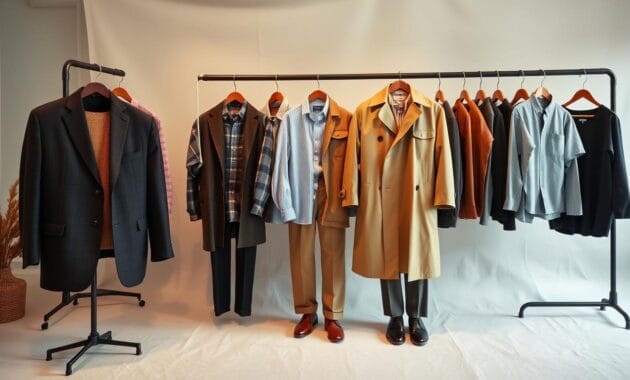
Mastering men’s business casual clothing means planning your wardrobe for each season. Your outfits should change with the weather but always look polished.
Spring and summer call for lighter, cooler outfits. Here’s what to do:
- Choose breathable fabrics like lightweight cotton and linen
- Opt for softer color palettes including pastels and light neutrals
- Select unlined blazers for improved comfort
- Embrace short-sleeve button-downs with crisp tailoring
Fabric selection is key in warmer months. Light fabrics help you stay cool without losing style. Cotton-linen blends are great for regulating temperature.
Fall and winter need a different look for business casual. Layering is key to staying stylish and warm:
- Incorporate wool sweaters and cardigans
- Choose darker, richer color tones like burgundy and forest green
- Utilize textured fabrics such as flannel and tweed
- Invest in versatile outerwear like tailored blazers and sport coats
Transitional seasons require outfits that can adapt. Lightweight merino wool sweaters and unstructured blazers are perfect. They help you look good indoors and outdoors.
Industry-Specific Business Casual Guidelines
Understanding men’s smart casual work clothes means knowing the dress code for each job. Every field has its own rules for what’s okay to wear. These rules are not just about following a trend, but about fitting in with the culture of your workplace.
In finance and law, it’s all about looking polished. Your clothes should be neat and show you’re serious about your job. Think of tailored pants, crisp shirts, and blazers that scream professionalism.
- Financial Services: Stick to neutral colors and structured pieces
- Legal Profession: Opt for sophisticated, understated clothing
- Technology Sector: Embrace more relaxed, innovative styling
- Creative Industries: Allow more personal expression
In creative fields like advertising and design, you have more freedom. You can try out bold colors, interesting textures, and looser fits. But remember, you’re always representing your company, so keep it professional.
Tech startups are the most laid-back when it comes to dress codes. Silicon Valley’s influence has made it okay to wear everything from classic polo shirts to quality denim. It’s all about looking good while feeling comfortable.
When choosing your business casual outfit, keep these tips in mind:
- Watch what your colleagues wear
- Check your company’s dress code
- Choose a bit more formal than you think you need to
- Invest in pieces that are versatile and well-made
Your goal is to fit in while also showing your unique style. It’s about being both professional and personal.
Conclusion
Business casual is more than just a dress code. It’s about creating a style that shows your professional side while feeling comfortable. It’s about mixing pieces to make a look that’s both confident and fitting for today’s work world.
We’ve given you the tools to upgrade your work clothes. From picking the right chinos to choosing the perfect accessories, we’ve covered the basics. Your clothes tell people a lot about you, showing you’re smart, creative, and detail-oriented.
The aim of business casual is to find a balance between looking professional and being yourself. Remember, confidence is key. Trust your gut, know your work culture, and let your personality show through your clothes.
Your style journey is always changing, and so is your professional path. Embrace the flexibility of business casual and keep trying new looks. With the right attitude and clothes, you’ll excel in any work setting with style and authenticity.
FAQ
What exactly defines business casual in 2023?
How has business casual evolved over the years?
Can I wear jeans in a business casual environment?
How many business casual essentials do I really need?
Do business casual rules differ by industry?
How do I choose the right fit for business casual clothing?
What shoes work best for business casual?
How can I adapt business casual for different seasons?
Are accessories important in business casual?
How often should I update my business casual wardrobe?

I’m Rodrigo Durães, founder of CareersForge — the world’s leading career platform — and recognized as one of the most comprehensive and experienced career and life coaches globally. With multiple academic degrees from the world’s top universities and over two decades of experience as a CEO, my mission is clear: to help people unlock their full professional potential through honest, strategic, and proven content.