
What if you could start building wealth this year without needing to pick individual stocks or time the market?
I’ve seen many smart people put off investing because it feels too complex. They get lost in a sea of ticker symbols and financial jargon. Honestly, I understand the hesitation.
That’s why I believe pooled investment vehicles are one of the smartest entry points for new investors. They work by gathering money from many people to buy a diversified collection of assets. This single step gives you instant diversification, which is a cornerstone of managing risk.
For someone just starting out, this approach is a game-changer. You’re not betting on one company’s success. Instead, you own a small piece of hundreds. This is especially powerful for long-term goals like retirement.
The landscape in 2026 is more accessible than ever. Many options now have low or even no minimums to start. This guide cuts through the noise.
I’ll share three specific, reliable choices I’d recommend to family. We’ll focus on establishing a solid foundation for your money to grow steadily. Let’s begin.


Table of Contents
Introduction to Mutual Fund Investment for Beginners
Navigating the investment landscape as a newcomer is less about knowing everything and more about knowing where to begin. I’ve seen many smart people hesitate, thinking they need to be experts. Honestly, that feeling is normal.
The idea of putting your money to work can be intimidating. But it’s a crucial step for saving towards your financial goals and building real wealth. Before making any investment, take a moment to consider your personal risk tolerance.
Understanding the Investment Landscape
Think about how long you can do without the money you’re investing. Are you comfortable letting it sit for several years? This mindset is key.
The landscape today offers multiple vehicles, from retirement accounts to brokerage platforms. For someone starting out, pooled funds sit at the perfect intersection of accessibility and built-in diversification. The environment in 2026 is especially friendly, with lower fees and resources that demystify the process.
Why Starting Early Matters
I’ve learned the biggest mistake is waiting for a “perfect” time. The real advantage comes from starting early, even with small amounts. Time is your greatest asset for compound growth.
Every year you delay means missing out on the compounding effect—your returns generating their own returns. This can create a massive difference over decades. Your timeline directly shapes your strategy. Money needed soon stays in safer assets, while long-term funds can weather market ups and downs.
By investing in assets like stocks and bonds, you help your savings outpace inflation. This protects your future purchasing power and turns modest contributions into substantial wealth.
What Are Mutual Funds and How They Work
The power of a mutual fund lies in its ability to give you a slice of hundreds of companies with a single investment. I think of it as hiring a professional team to build and maintain a diversified portfolio on your behalf.
Mutual Fund Structure and Benefits
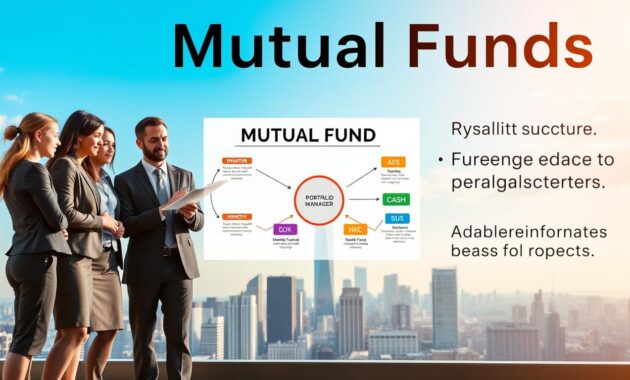
When you buy into one of these funds, you’re pooling money with thousands of other investors. That collective pool gets invested across dozens or hundreds of different securities like stocks and bonds.
Each share you own represents a proportional interest in the entire portfolio. If the fund holds Apple and Tesla, you effectively own a tiny piece of both. This structure delivers instant diversification, which is a massive benefit for newcomers.
Here’s what worked for me when I was starting. I focused on the simplicity. One fund meant professional management handled all the buying and selling. It also meant simplified tax reporting instead of tracking dozens of individual positions.
Active vs. Passive Management Explained
I’ve seen people get confused here, but the distinction is critical. Active funds employ analysts trying to beat the market by picking winning stocks. Passive funds simply mirror an index, like the S&P 500, without trying to outsmart it.
Honestly, the data strongly favors the passive approach for most people. Active funds often charge fees around 1% of assets annually. Most fail to outperform their benchmark over time.
Passive funds require minimal management. This results in much lower fees, sometimes as little as 0.03%. That difference compounds dramatically over decades, leaving more money in your pocket.
📚 Read Next
Your Financial Roadmap: Choosing the right fund is just one piece of the puzzle. See the big picture in our pillar post: How to Invest Mutual Funds.
Protect Your Capital: Every investment carries danger. Before buying the funds listed above, make sure you read Mutual Fund Risks: 5 Fatal Mistakes New Investors Make.
Market Data: According to financial rating giant Morningstar, beginners should focus on low-cost index funds to maximize long-term compound interest.
Best Mutual Funds for Beginners
I want to share the exact types of pooled investments I’d choose today for a simple, effective strategy. We’ll focus on safety and reliability for the 2026 landscape.
Safe and Reliable Options for 2026
My first pick is a low-cost S&P 500 index fund. It holds America’s 500 largest companies. This offers instant diversification and a long history of growth.
Next, consider a total stock market index fund. It includes small and mid-sized firms alongside giants. You get the entire U.S. market in one purchase.
The third core holding is a total bond market index fund. It adds stability and income. Bonds can balance the natural ups and downs of stocks.
| Fund Type | Key Feature | Ideal For | Fee Range |
|---|---|---|---|
| S&P 500 Index Fund | 500 largest U.S. companies | Core equity exposure | 0.03% – 0.10% |
| Total Stock Market Fund | Entire U.S. stock universe | Maximum diversification | 0.04% – 0.12% |
| Total Bond Market Fund | Thousands of government & corporate bonds | Stability & income | 0.05% – 0.15% |

Comparing Fees and Performance
I’ve learned that fees matter far more than most newcomers realize. A tiny percentage difference compounds into a huge sum over decades.
Some sector funds posted impressive returns recently. For example, a semiconductor fund returned over 32% in five years. Honestly, these are not safe for true beginners.
They carry higher risk and volatility. Chasing past performance is a common mistake. Consistency over a long horizon is what builds real wealth.
Look for broad index funds with expense ratios under 0.20%. Their track record of tracking the market reliably is what you want.
Exploring Safe Investment Options for 2026
Let’s talk about what ‘safe’ really means when you’re putting your money to work for the long haul. I’ve realized over years that safe doesn’t mean zero risk. It means appropriate risk matched to your timeline.
In 2026, the safest options for newcomers remain broad-based index funds combined with some bond exposure. This approach balances growth potential with stability.
Benefits of Diversification
Diversification is the closest thing to a free lunch in investing. By spreading your money across hundreds of companies, you reduce the impact any single poor performer has on your overall portfolio.
Here’s what I’ve seen work consistently. When you own an S&P 500 index fund, you’re diversified across technology, healthcare, finance, and every other major sector. If one sector struggles, others may be thriving.
How Index Funds Fit into Your Strategy
Index funds fit into your plan as the core foundation. I typically recommend putting 70-90% of long-term investment money into low-cost index funds tracking broad markets.
The beauty of these funds in 2026 is incredible access. You can start with minimal investment requirements, often $0 to $3,000. Expense ratios have fallen to levels like 0.03% annually.
Matching investments to your timeline is critical. Money needed within five years belongs in safer assets. Money for retirement decades away can be more aggressively invested in stock index funds.
Studies consistently show passive index fund investing outperforms active management over 10, 20, and 30 years. Your strategy should embrace this reality.
Key Factors to Consider When Choosing Mutual Funds
Your investment success hinges on two factors you control completely: your risk profile and your cost awareness. I’ve learned that overlooking these leads to poor decisions.
Getting this right forms the bedrock of a solid plan.
Risk Tolerance and Investment Goals
Risk tolerance is more than just your personality. It’s your timeline, financial cushion, and ability to watch balances drop without panic.
I push people to define specific goals. “Save $60,000 for a house in four years” shapes your choices far more than a vague wish.
This clarity prevents selling during downturns. It matches your investment to your real-life needs.
Assessing Fees, Costs, and Minimum Investments
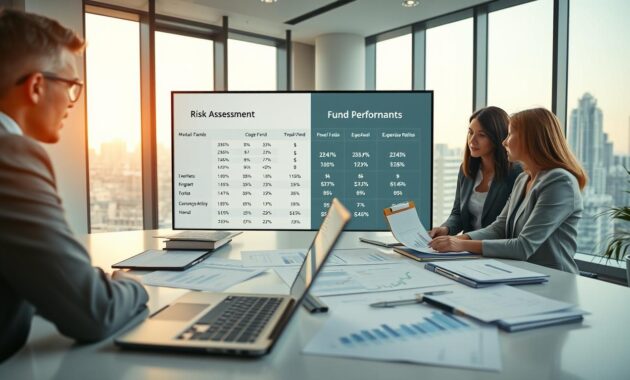
Costs are the one certainty. A fund charging 1% annually versus 0.04% can cost you thousands over decades.
Always filter for expense ratios under 0.20%. This decision directly boosts your long-term results.
Also, check the minimum investment. Some great options require $3,000, while others start at $0.
Don’t let this detail frustrate your start. Knowing fees and minimums keeps you in control of your wealth journey.
Building a Diversified Portfolio with Mutual Funds and ETFs
Many investors I meet feel they must choose between mutual funds and ETFs, but that’s a false dilemma. They are complementary tools that can work together in your portfolio.
Each has specific advantages depending on your situation and account type. Building a diversified portfolio might sound complex, but I’ve found the simplest approach works best.
Mixing Mutual Funds with ETFs and Index Funds
ETFs offer some practical advantages. They trade throughout the day like stocks, giving you flexibility. They typically have no minimum investment beyond the share price.
Expense ratios are often lower for ETFs than equivalent index mutual funds. This can save you money over decades.
Traditional mutual funds have their place too. In a 401(k), you’ll likely use them because that’s what most plans offer. They provide simplicity with once-daily pricing.
Here’s my practical mixing strategy. Use mutual funds in tax-advantaged retirement accounts like IRAs and 401(k)s. In a personal taxable brokerage account, ETFs often make more sense due to flexibility and tax efficiency.
The advantage of mixing comes from this tax efficiency. ETFs tend to be slightly more tax-efficient in taxable accounts due to their structure.
When you’re investing in mutual funds or ETFs, remember you’re selecting them for the underlying assets they hold. A total stock market mutual fund and a total stock market ETF tracking the same index will deliver virtually identical results over time.
| Feature | ETF | Mutual Fund |
|---|---|---|
| Minimum Investment | Cost of 1 share (often $50-$500) | Often $1,000-$3,000 initial minimum |
| Trading | Throughout the day on exchanges | Once daily at closing NAV |
| Typical Expense Ratio | Lower (often 0.03%-0.10%) | Varies (index funds can be 0.04%-0.15%) |
| Tax Efficiency | Generally higher in taxable accounts | Less efficient; capital gains distributions |
| Common Use | Taxable accounts, flexible trading | 401(k) plans, retirement accounts |
I’ve seen people overthink portfolio construction. The evidence shows a simple three-fund portfolio works beautifully. Combine one total U.S. stock market fund, one total international stock fund, and one total bond market fund.
Adjust the proportions by your age and risk tolerance. This blend gives you instant diversification across hundreds of companies and bonds.
Your portfolio becomes resilient and built for long-term growth. It’s a straightforward path I recommend.
Tips for Successful Investment Decisions
The most successful investors I’ve met share one common trait: they have a clear system and avoid emotional reactions. Your investment success hinges on a few disciplined principles that sound simple but require commitment.
Match every dollar to your timeline. Money needed soon stays safe. Money for decades ahead can target higher growth.
Long-Term Growth Strategies
Think in decades, not months. This long term view harnesses compounding returns. Your money gets time to recover from downturns.
I set up automatic contributions. This builds wealth without daily effort. Choose a simple portfolio of broad index funds.
Rebalance annually. If stocks surge, sell some to buy bonds. This forces you to “sell high and buy low” systematically.
Tailoring Your Approach for Beginners
For a beginner, focus on habits over optimal returns. Start with $50 monthly if that’s what you can afford. Establish the routine first.
Resist chasing last year’s top performer. The market rotates, and yesterday’s winner often lags. Manage your expectations instead.
Understand that stock funds can drop 20% in a bad year. Bond funds offer steadier income. This knowledge helps you stay calm during volatile trading periods.
Your approach should evolve as you learn. But the core discipline—matching investments to your timeline—remains your guiding light.
Managing Investment Costs, Fees, and Risks
Controlling your investment costs isn’t just about saving pennies. It’s about protecting your future returns from silent erosion.
I’ve learned that small fees compound against you just as powerfully as your money compounds for you. This vigilance is a non-negotiable part of a smart strategy.
Understanding Expense Ratios and Commission Structures
The expense ratio is the annual fee a fund charges. It covers management and operating costs. For every $1,000 invested, a 1% ratio costs you $10 yearly.
This fee is deducted automatically, reducing your net returns. Always look for ratios under 0.20% for stock index funds.
Commission structures matter too. Load funds charge a sales fee, often 3-5%. This comes right off the top when you buy or sell. I only recommend no-load funds. There’s no reason to pay that commission today.
Minimizing Brokerage Fees and Other Hidden Costs
Most major brokerage firms now offer zero-commission trading for stocks and ETFs. However, some still charge transaction fees for certain mutual funds.
Verify your broker offers no-transaction-fee options. Hidden costs also include early redemption fees and account maintenance fees.
Taxes are another hidden fee. In taxable accounts, you owe capital gains tax when you sell appreciated securities. Using tax-advantaged accounts like IRAs can shield your returns.
| Fee Type | Typical Cost | Impact on Returns | How to Avoid |
|---|---|---|---|
| Expense Ratio | 0.03% – 1.50% annually | Directly reduces net gains each year | Choose broad index funds under 0.20% |
| Sales Load (Commission) | 3% – 5% of investment | Immediate loss before investment grows | Select only no-load funds |
| Brokerage Transaction Fee | $0 – $49.95 per trade | Erodes capital with each buy/sell | Use brokers with $0 commission lists |
| Account Maintenance Fee | $20 – $50 annually | Small but persistent drag | Meet minimum balance requirements |
For new investors, focusing on low-cost, no-load funds is the clearest path. It keeps more of your money working for you every day.
Conclusion
The true test of an investment plan isn’t its design, but your ability to stick with it through market storms. I’ve seen people build real wealth by focusing on simple, low-cost index funds like the S&P 500 or total market options.
Your success hinges on consistency, not perfection. Start with what you can, contribute regularly, and let time work for you.
Honestly, the hardest part is staying calm when prices drop. That’s where a mix of stocks and bonds provides stability. Your financial goals become reachable with patience and discipline.
Take that first step this week. Open an account, choose a fund with low fees, and make your initial investment. Your future self will thank you.
FAQ
I’m just starting out. What’s the simplest type of fund to understand and buy?
How much money do I actually need to start investing in these?
I’m just starting out. What’s the simplest type of fund to understand and buy?
How much money do I actually need to start investing in these?
FAQ
I’m just starting out. What’s the simplest type of fund to understand and buy?
I always point new investors toward index funds. They’re designed to simply mirror the market, like the S&P 500. You’re not betting on a manager’s stock-picking skill; you’re buying a small piece of hundreds of companies at once. This approach is straightforward, typically has low fees, and is a fantastic core for any new portfolio. It removes a lot of the complexity and stress from your first decision.
How much money do I actually need to start investing in these?
This is a common hurdle, but it’s lower than you think. Many great funds from providers like Vanguard or Fidelity have minimum investments of
FAQ
I’m just starting out. What’s the simplest type of fund to understand and buy?
I always point new investors toward index funds. They’re designed to simply mirror the market, like the S&P 500. You’re not betting on a manager’s stock-picking skill; you’re buying a small piece of hundreds of companies at once. This approach is straightforward, typically has low fees, and is a fantastic core for any new portfolio. It removes a lot of the complexity and stress from your first decision.
How much money do I actually need to start investing in these?
This is a common hurdle, but it’s lower than you think. Many great funds from providers like Vanguard or Fidelity have minimum investments of $1,000 or even $0 if you set up automatic monthly contributions. The key isn’t a large lump sum—it’s starting. Even a small, regular investment builds powerful habits and lets compounding work for you over the long term.
What’s the single biggest fee I should watch out for?
Focus on the expense ratio. This is an annual fee that eats directly into your returns. For a beginner, a high expense ratio is a heavy anchor. Look for broad-market index funds or ETFs with ratios under 0.10%. Paying more in fees means less money growing for you. It’s one of the few things in investing you can control, so be ruthless about it.
Are mutual funds safer than buying individual stocks?
“Safer” in investing is about reducing specific risk. A single stock can go to zero. A mutual fund holds dozens or hundreds of securities. If one company stumbles, others can balance it out. This built-in diversification is the primary safety feature. They’re not immune to market drops, but they prevent one bad company from wrecking your entire portfolio.
What’s the difference between a mutual fund and an ETF?
The main difference for a beginner is how they trade. A traditional mutual fund is priced and traded once, after the market closes. An ETF (Exchange-Traded Fund) trades like a stock throughout the day. For long-term investing, this difference is minor. ETFs often have slightly lower costs and no minimums, making them very accessible. Both are excellent tools for diversification.
How do I know which fund matches my personal risk tolerance?
Honestly, your gut feeling during a market drop is a good test. Look at the fund’s holdings. A fund full of tech stocks will be more volatile than one mixing stocks and bonds. Your investment goals and timeline decide your risk. If you’re saving for a goal 20+ years away, you can generally handle more short-term ups and downs in pursuit of higher growth.
,000 or even
FAQ
I’m just starting out. What’s the simplest type of fund to understand and buy?
I always point new investors toward index funds. They’re designed to simply mirror the market, like the S&P 500. You’re not betting on a manager’s stock-picking skill; you’re buying a small piece of hundreds of companies at once. This approach is straightforward, typically has low fees, and is a fantastic core for any new portfolio. It removes a lot of the complexity and stress from your first decision.
How much money do I actually need to start investing in these?
This is a common hurdle, but it’s lower than you think. Many great funds from providers like Vanguard or Fidelity have minimum investments of $1,000 or even $0 if you set up automatic monthly contributions. The key isn’t a large lump sum—it’s starting. Even a small, regular investment builds powerful habits and lets compounding work for you over the long term.
What’s the single biggest fee I should watch out for?
Focus on the expense ratio. This is an annual fee that eats directly into your returns. For a beginner, a high expense ratio is a heavy anchor. Look for broad-market index funds or ETFs with ratios under 0.10%. Paying more in fees means less money growing for you. It’s one of the few things in investing you can control, so be ruthless about it.
Are mutual funds safer than buying individual stocks?
“Safer” in investing is about reducing specific risk. A single stock can go to zero. A mutual fund holds dozens or hundreds of securities. If one company stumbles, others can balance it out. This built-in diversification is the primary safety feature. They’re not immune to market drops, but they prevent one bad company from wrecking your entire portfolio.
What’s the difference between a mutual fund and an ETF?
The main difference for a beginner is how they trade. A traditional mutual fund is priced and traded once, after the market closes. An ETF (Exchange-Traded Fund) trades like a stock throughout the day. For long-term investing, this difference is minor. ETFs often have slightly lower costs and no minimums, making them very accessible. Both are excellent tools for diversification.
How do I know which fund matches my personal risk tolerance?
Honestly, your gut feeling during a market drop is a good test. Look at the fund’s holdings. A fund full of tech stocks will be more volatile than one mixing stocks and bonds. Your investment goals and timeline decide your risk. If you’re saving for a goal 20+ years away, you can generally handle more short-term ups and downs in pursuit of higher growth.
FAQ
I’m just starting out. What’s the simplest type of fund to understand and buy?
I always point new investors toward index funds. They’re designed to simply mirror the market, like the S&P 500. You’re not betting on a manager’s stock-picking skill; you’re buying a small piece of hundreds of companies at once. This approach is straightforward, typically has low fees, and is a fantastic core for any new portfolio. It removes a lot of the complexity and stress from your first decision.
How much money do I actually need to start investing in these?
This is a common hurdle, but it’s lower than you think. Many great funds from providers like Vanguard or Fidelity have minimum investments of
FAQ
I’m just starting out. What’s the simplest type of fund to understand and buy?
I always point new investors toward index funds. They’re designed to simply mirror the market, like the S&P 500. You’re not betting on a manager’s stock-picking skill; you’re buying a small piece of hundreds of companies at once. This approach is straightforward, typically has low fees, and is a fantastic core for any new portfolio. It removes a lot of the complexity and stress from your first decision.
How much money do I actually need to start investing in these?
This is a common hurdle, but it’s lower than you think. Many great funds from providers like Vanguard or Fidelity have minimum investments of $1,000 or even $0 if you set up automatic monthly contributions. The key isn’t a large lump sum—it’s starting. Even a small, regular investment builds powerful habits and lets compounding work for you over the long term.
What’s the single biggest fee I should watch out for?
Focus on the expense ratio. This is an annual fee that eats directly into your returns. For a beginner, a high expense ratio is a heavy anchor. Look for broad-market index funds or ETFs with ratios under 0.10%. Paying more in fees means less money growing for you. It’s one of the few things in investing you can control, so be ruthless about it.
Are mutual funds safer than buying individual stocks?
“Safer” in investing is about reducing specific risk. A single stock can go to zero. A mutual fund holds dozens or hundreds of securities. If one company stumbles, others can balance it out. This built-in diversification is the primary safety feature. They’re not immune to market drops, but they prevent one bad company from wrecking your entire portfolio.
What’s the difference between a mutual fund and an ETF?
The main difference for a beginner is how they trade. A traditional mutual fund is priced and traded once, after the market closes. An ETF (Exchange-Traded Fund) trades like a stock throughout the day. For long-term investing, this difference is minor. ETFs often have slightly lower costs and no minimums, making them very accessible. Both are excellent tools for diversification.
How do I know which fund matches my personal risk tolerance?
Honestly, your gut feeling during a market drop is a good test. Look at the fund’s holdings. A fund full of tech stocks will be more volatile than one mixing stocks and bonds. Your investment goals and timeline decide your risk. If you’re saving for a goal 20+ years away, you can generally handle more short-term ups and downs in pursuit of higher growth.
,000 or even
FAQ
I’m just starting out. What’s the simplest type of fund to understand and buy?
I always point new investors toward index funds. They’re designed to simply mirror the market, like the S&P 500. You’re not betting on a manager’s stock-picking skill; you’re buying a small piece of hundreds of companies at once. This approach is straightforward, typically has low fees, and is a fantastic core for any new portfolio. It removes a lot of the complexity and stress from your first decision.
How much money do I actually need to start investing in these?
This is a common hurdle, but it’s lower than you think. Many great funds from providers like Vanguard or Fidelity have minimum investments of $1,000 or even $0 if you set up automatic monthly contributions. The key isn’t a large lump sum—it’s starting. Even a small, regular investment builds powerful habits and lets compounding work for you over the long term.
What’s the single biggest fee I should watch out for?
Focus on the expense ratio. This is an annual fee that eats directly into your returns. For a beginner, a high expense ratio is a heavy anchor. Look for broad-market index funds or ETFs with ratios under 0.10%. Paying more in fees means less money growing for you. It’s one of the few things in investing you can control, so be ruthless about it.
Are mutual funds safer than buying individual stocks?
“Safer” in investing is about reducing specific risk. A single stock can go to zero. A mutual fund holds dozens or hundreds of securities. If one company stumbles, others can balance it out. This built-in diversification is the primary safety feature. They’re not immune to market drops, but they prevent one bad company from wrecking your entire portfolio.
What’s the difference between a mutual fund and an ETF?
The main difference for a beginner is how they trade. A traditional mutual fund is priced and traded once, after the market closes. An ETF (Exchange-Traded Fund) trades like a stock throughout the day. For long-term investing, this difference is minor. ETFs often have slightly lower costs and no minimums, making them very accessible. Both are excellent tools for diversification.
How do I know which fund matches my personal risk tolerance?
Honestly, your gut feeling during a market drop is a good test. Look at the fund’s holdings. A fund full of tech stocks will be more volatile than one mixing stocks and bonds. Your investment goals and timeline decide your risk. If you’re saving for a goal 20+ years away, you can generally handle more short-term ups and downs in pursuit of higher growth.
What’s the single biggest fee I should watch out for?
Are mutual funds safer than buying individual stocks?
What’s the difference between a mutual fund and an ETF?
How do I know which fund matches my personal risk tolerance?
I’m just starting out. What’s the simplest type of fund to understand and buy?
How much money do I actually need to start investing in these?
FAQ
I’m just starting out. What’s the simplest type of fund to understand and buy?
I always point new investors toward index funds. They’re designed to simply mirror the market, like the S&P 500. You’re not betting on a manager’s stock-picking skill; you’re buying a small piece of hundreds of companies at once. This approach is straightforward, typically has low fees, and is a fantastic core for any new portfolio. It removes a lot of the complexity and stress from your first decision.
How much money do I actually need to start investing in these?
This is a common hurdle, but it’s lower than you think. Many great funds from providers like Vanguard or Fidelity have minimum investments of
FAQ
I’m just starting out. What’s the simplest type of fund to understand and buy?
I always point new investors toward index funds. They’re designed to simply mirror the market, like the S&P 500. You’re not betting on a manager’s stock-picking skill; you’re buying a small piece of hundreds of companies at once. This approach is straightforward, typically has low fees, and is a fantastic core for any new portfolio. It removes a lot of the complexity and stress from your first decision.
How much money do I actually need to start investing in these?
This is a common hurdle, but it’s lower than you think. Many great funds from providers like Vanguard or Fidelity have minimum investments of $1,000 or even $0 if you set up automatic monthly contributions. The key isn’t a large lump sum—it’s starting. Even a small, regular investment builds powerful habits and lets compounding work for you over the long term.
What’s the single biggest fee I should watch out for?
Focus on the expense ratio. This is an annual fee that eats directly into your returns. For a beginner, a high expense ratio is a heavy anchor. Look for broad-market index funds or ETFs with ratios under 0.10%. Paying more in fees means less money growing for you. It’s one of the few things in investing you can control, so be ruthless about it.
Are mutual funds safer than buying individual stocks?
“Safer” in investing is about reducing specific risk. A single stock can go to zero. A mutual fund holds dozens or hundreds of securities. If one company stumbles, others can balance it out. This built-in diversification is the primary safety feature. They’re not immune to market drops, but they prevent one bad company from wrecking your entire portfolio.
What’s the difference between a mutual fund and an ETF?
The main difference for a beginner is how they trade. A traditional mutual fund is priced and traded once, after the market closes. An ETF (Exchange-Traded Fund) trades like a stock throughout the day. For long-term investing, this difference is minor. ETFs often have slightly lower costs and no minimums, making them very accessible. Both are excellent tools for diversification.
How do I know which fund matches my personal risk tolerance?
Honestly, your gut feeling during a market drop is a good test. Look at the fund’s holdings. A fund full of tech stocks will be more volatile than one mixing stocks and bonds. Your investment goals and timeline decide your risk. If you’re saving for a goal 20+ years away, you can generally handle more short-term ups and downs in pursuit of higher growth.
,000 or even
FAQ
I’m just starting out. What’s the simplest type of fund to understand and buy?
I always point new investors toward index funds. They’re designed to simply mirror the market, like the S&P 500. You’re not betting on a manager’s stock-picking skill; you’re buying a small piece of hundreds of companies at once. This approach is straightforward, typically has low fees, and is a fantastic core for any new portfolio. It removes a lot of the complexity and stress from your first decision.
How much money do I actually need to start investing in these?
This is a common hurdle, but it’s lower than you think. Many great funds from providers like Vanguard or Fidelity have minimum investments of $1,000 or even $0 if you set up automatic monthly contributions. The key isn’t a large lump sum—it’s starting. Even a small, regular investment builds powerful habits and lets compounding work for you over the long term.
What’s the single biggest fee I should watch out for?
Focus on the expense ratio. This is an annual fee that eats directly into your returns. For a beginner, a high expense ratio is a heavy anchor. Look for broad-market index funds or ETFs with ratios under 0.10%. Paying more in fees means less money growing for you. It’s one of the few things in investing you can control, so be ruthless about it.
Are mutual funds safer than buying individual stocks?
“Safer” in investing is about reducing specific risk. A single stock can go to zero. A mutual fund holds dozens or hundreds of securities. If one company stumbles, others can balance it out. This built-in diversification is the primary safety feature. They’re not immune to market drops, but they prevent one bad company from wrecking your entire portfolio.
What’s the difference between a mutual fund and an ETF?
The main difference for a beginner is how they trade. A traditional mutual fund is priced and traded once, after the market closes. An ETF (Exchange-Traded Fund) trades like a stock throughout the day. For long-term investing, this difference is minor. ETFs often have slightly lower costs and no minimums, making them very accessible. Both are excellent tools for diversification.
How do I know which fund matches my personal risk tolerance?
Honestly, your gut feeling during a market drop is a good test. Look at the fund’s holdings. A fund full of tech stocks will be more volatile than one mixing stocks and bonds. Your investment goals and timeline decide your risk. If you’re saving for a goal 20+ years away, you can generally handle more short-term ups and downs in pursuit of higher growth.
FAQ
I’m just starting out. What’s the simplest type of fund to understand and buy?
I always point new investors toward index funds. They’re designed to simply mirror the market, like the S&P 500. You’re not betting on a manager’s stock-picking skill; you’re buying a small piece of hundreds of companies at once. This approach is straightforward, typically has low fees, and is a fantastic core for any new portfolio. It removes a lot of the complexity and stress from your first decision.
How much money do I actually need to start investing in these?
This is a common hurdle, but it’s lower than you think. Many great funds from providers like Vanguard or Fidelity have minimum investments of
FAQ
I’m just starting out. What’s the simplest type of fund to understand and buy?
I always point new investors toward index funds. They’re designed to simply mirror the market, like the S&P 500. You’re not betting on a manager’s stock-picking skill; you’re buying a small piece of hundreds of companies at once. This approach is straightforward, typically has low fees, and is a fantastic core for any new portfolio. It removes a lot of the complexity and stress from your first decision.
How much money do I actually need to start investing in these?
This is a common hurdle, but it’s lower than you think. Many great funds from providers like Vanguard or Fidelity have minimum investments of $1,000 or even $0 if you set up automatic monthly contributions. The key isn’t a large lump sum—it’s starting. Even a small, regular investment builds powerful habits and lets compounding work for you over the long term.
What’s the single biggest fee I should watch out for?
Focus on the expense ratio. This is an annual fee that eats directly into your returns. For a beginner, a high expense ratio is a heavy anchor. Look for broad-market index funds or ETFs with ratios under 0.10%. Paying more in fees means less money growing for you. It’s one of the few things in investing you can control, so be ruthless about it.
Are mutual funds safer than buying individual stocks?
“Safer” in investing is about reducing specific risk. A single stock can go to zero. A mutual fund holds dozens or hundreds of securities. If one company stumbles, others can balance it out. This built-in diversification is the primary safety feature. They’re not immune to market drops, but they prevent one bad company from wrecking your entire portfolio.
What’s the difference between a mutual fund and an ETF?
The main difference for a beginner is how they trade. A traditional mutual fund is priced and traded once, after the market closes. An ETF (Exchange-Traded Fund) trades like a stock throughout the day. For long-term investing, this difference is minor. ETFs often have slightly lower costs and no minimums, making them very accessible. Both are excellent tools for diversification.
How do I know which fund matches my personal risk tolerance?
Honestly, your gut feeling during a market drop is a good test. Look at the fund’s holdings. A fund full of tech stocks will be more volatile than one mixing stocks and bonds. Your investment goals and timeline decide your risk. If you’re saving for a goal 20+ years away, you can generally handle more short-term ups and downs in pursuit of higher growth.
,000 or even
FAQ
I’m just starting out. What’s the simplest type of fund to understand and buy?
I always point new investors toward index funds. They’re designed to simply mirror the market, like the S&P 500. You’re not betting on a manager’s stock-picking skill; you’re buying a small piece of hundreds of companies at once. This approach is straightforward, typically has low fees, and is a fantastic core for any new portfolio. It removes a lot of the complexity and stress from your first decision.
How much money do I actually need to start investing in these?
This is a common hurdle, but it’s lower than you think. Many great funds from providers like Vanguard or Fidelity have minimum investments of $1,000 or even $0 if you set up automatic monthly contributions. The key isn’t a large lump sum—it’s starting. Even a small, regular investment builds powerful habits and lets compounding work for you over the long term.
What’s the single biggest fee I should watch out for?
Focus on the expense ratio. This is an annual fee that eats directly into your returns. For a beginner, a high expense ratio is a heavy anchor. Look for broad-market index funds or ETFs with ratios under 0.10%. Paying more in fees means less money growing for you. It’s one of the few things in investing you can control, so be ruthless about it.
Are mutual funds safer than buying individual stocks?
“Safer” in investing is about reducing specific risk. A single stock can go to zero. A mutual fund holds dozens or hundreds of securities. If one company stumbles, others can balance it out. This built-in diversification is the primary safety feature. They’re not immune to market drops, but they prevent one bad company from wrecking your entire portfolio.
What’s the difference between a mutual fund and an ETF?
The main difference for a beginner is how they trade. A traditional mutual fund is priced and traded once, after the market closes. An ETF (Exchange-Traded Fund) trades like a stock throughout the day. For long-term investing, this difference is minor. ETFs often have slightly lower costs and no minimums, making them very accessible. Both are excellent tools for diversification.
How do I know which fund matches my personal risk tolerance?
Honestly, your gut feeling during a market drop is a good test. Look at the fund’s holdings. A fund full of tech stocks will be more volatile than one mixing stocks and bonds. Your investment goals and timeline decide your risk. If you’re saving for a goal 20+ years away, you can generally handle more short-term ups and downs in pursuit of higher growth.
What’s the single biggest fee I should watch out for?
Are mutual funds safer than buying individual stocks?
What’s the difference between a mutual fund and an ETF?
How do I know which fund matches my personal risk tolerance?
if you set up automatic monthly contributions. The key isn’t a large lump sum—it’s starting. Even a small, regular investment builds powerful habits and lets compounding work for you over the long term.
What’s the single biggest fee I should watch out for?
Focus on the expense ratio. This is an annual fee that eats directly into your returns. For a beginner, a high expense ratio is a heavy anchor. Look for broad-market index funds or ETFs with ratios under 0.10%. Paying more in fees means less money growing for you. It’s one of the few things in investing you can control, so be ruthless about it.
Are mutual funds safer than buying individual stocks?
“Safer” in investing is about reducing specific risk. A single stock can go to zero. A mutual fund holds dozens or hundreds of securities. If one company stumbles, others can balance it out. This built-in diversification is the primary safety feature. They’re not immune to market drops, but they prevent one bad company from wrecking your entire portfolio.
What’s the difference between a mutual fund and an ETF?
The main difference for a beginner is how they trade. A traditional mutual fund is priced and traded once, after the market closes. An ETF (Exchange-Traded Fund) trades like a stock throughout the day. For long-term investing, this difference is minor. ETFs often have slightly lower costs and no minimums, making them very accessible. Both are excellent tools for diversification.
How do I know which fund matches my personal risk tolerance?
Honestly, your gut feeling during a market drop is a good test. Look at the fund’s holdings. A fund full of tech stocks will be more volatile than one mixing stocks and bonds. Your investment goals and timeline decide your risk. If you’re saving for a goal 20+ years away, you can generally handle more short-term ups and downs in pursuit of higher growth.

I’m Rodrigo Durães, founder of CareersForge — the world’s leading career platform — and recognized as one of the most comprehensive and experienced career and life coaches globally. With multiple academic degrees from the world’s top universities and over two decades of experience as a CEO, my mission is clear: to help people unlock their full professional potential through honest, strategic, and proven content.