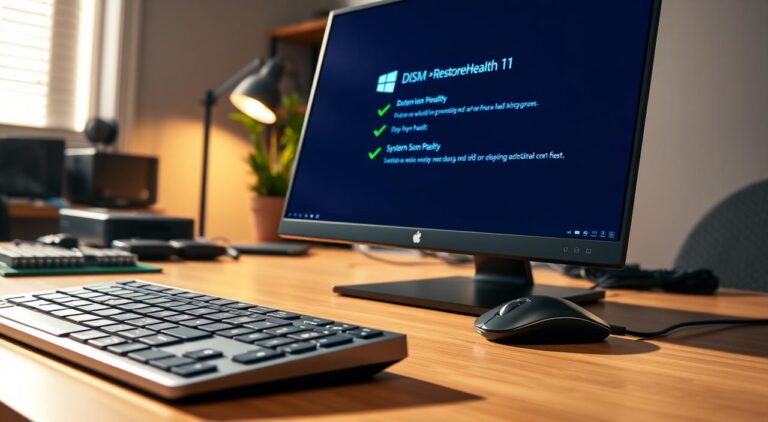
Ever felt like your PC is haunted—random crashes, slowdowns, or odd errors—and wondered if a single fix could save hours? I’ve been there. I reach for a reliable repair when basic tweaks fail and the problem smells like corrupted system files.
I’ll walk you through a clear, six-step path that starts with a disk check and moves into targeted health checks, the main recovery command, and follow-up scans. Honest aside: I’ve seen this tool recover data and normal behavior after risky updates or sudden shutdowns.
This guide explains why the repair ties to the operating image and what success looks like so you don’t panic if a step seems slow. I use plain language and real steps you can run from an elevated command prompt.
If you want fewer reinstalls and faster fixes, keep reading—this approach often saves hours compared with chasing settings at random.
This is an advanced recovery tool. If you are just looking for basic support or contact info, refer to our guide on How to Get Help in Windows instead.
Table of Contents
When to use DISM and what it repairs in Windows 11

If your PC shows repeat crashes, freezing, or boot oddities, I check the image next. These symptoms often point to damaged protected files or a broken component store that feeds them.
Common symptoms tied to corrupted system files
Look for BSODs, apps that close unexpectedly, slow startups, or features that stop working. These are real-world signs I watch for.


What deployment image servicing means
Deployment image servicing is the built-in servicing tool that repairs the operating system image your computer uses. It restores the component store so the file checker can pull clean copies.
Tool comparison: image servicing vs system file checker
Think of the relationship like this: the system file checker checks protected system file integrity and swaps in cached copies. The image servicing management process repairs the larger image that supplies those copies.
- If SFC keeps failing or fixes don’t hold, run image servicing next.
- Image servicing may need an internet connection to pull replacement content; SFC can scan offline.
- A scan reports issues; a repair replaces damaged components.
| Focus | What it fixes | Connectivity |
|---|---|---|
| System File Checker (file checker) | Protected system file corruption | Works offline; uses local cached copies |
| Deployment image servicing | Component store / operating system image | May use Windows Update to download replacement files |
| When to run | Quick fixes that recur after SFC | When SFC reports component store problems |
| Result | Restores foundation so future file repairs hold | Enables more reliable repair windows |
Prep steps before repairs: check the disk and open an elevated Command Prompt
I begin every repair by verifying the file system and launching a prompt with admin rights. This avoids chasing the same problems later and makes the main repair process effective.
How to open an elevated prompt and confirm administrator rights
Search “cmd,” right-click Command Prompt or Windows Terminal, and select Run as administrator. Approve the UAC prompt to confirm you truly run administrator commands.
Quick check: the window title should show “Administrator” so you know elevation worked. If it doesn’t, close and repeat the select run step.
Run CHKDSK to prevent recurring corruption
At the elevated prompt type: chkdsk c: /f /r and press Enter. Windows will ask to schedule the check on reboot; type Y to confirm.
The /f flag fixes errors and /r locates bad sectors. This can take significant time depending on disk size and health.
What to expect on restart and why you shouldn’t interrupt
On reboot the disk check runs before the OS loads. You may see a “press any key to skip” message — don’t skip. Interrupting CHKDSK can worsen file system problems and make later repairs fail.
When CHKDSK completes and the system is stable, you can continue with the image repair steps confidently.
Now that DISM has restored the health of your Windows image, it is crucial to run the SFC Scannow command again to finalize the repair of individual files.
DISM RestoreHealth Windows 11: the core commands to scan and repair the Windows image
When the component store looks sick, I run three focused commands to check and fix the image.
Start at an elevated prompt and run the following in order. Each command reveals more and then repairs the system.
Use /CheckHealth for a quick health check
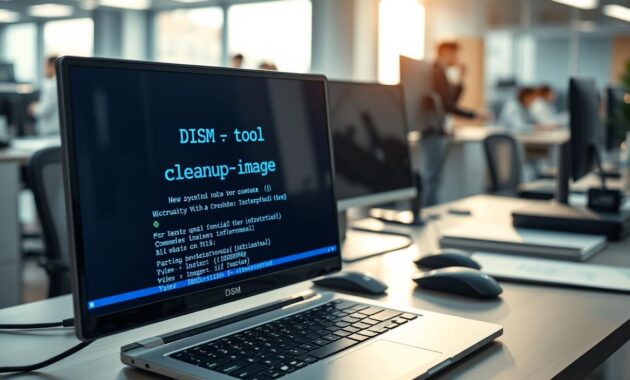
Command: DISM /Online /Cleanup-Image /CheckHealth. This is a fast probe that tells you whether the image has recorded corruption. If it reports clean, you can skip deeper scans.
Use /ScanHealth for a deeper component store scan
Command: DISM /Online /Cleanup-Image /ScanHealth. This takes longer and inspects the image more thoroughly. Expect more minutes on slower disks or larger issues.
📚 Read Next
Pre-Requisite: You should usually try the lighter repair first. Have you run the System File Checker? Check SFC Scannow Windows 11 Guide.
More Solutions: If the command line isn’t for you, try the automated tools listed in How to Get Help in Windows.
Expert Tip: According to PCMag, DISM is the definitive tool for fixing the Windows Component Store when standard updates fail.
Use /RestoreHealth and what a “stuck percentage” really means
Command: DISM.exe /Online /Cleanup-Image /RestoreHealth. This is the repair step: it validates the component store and pulls in clean files as needed. If the percentage pauses, it is often downloading or validating large files. Do not close the prompt.
Press Enter to execute any of these commands. Wait until the tool returns control to the prompt before running the next step. Typical runs can take 15–20 minutes, but slow systems or broken update sources can extend that time.
- Don’t close the window mid-run.
- Don’t reboot to “unstick” unless it’s truly hung many hours.
- If repair can’t find files, you may need another source next.
| Command | Purpose | Typical time | When to run |
|---|---|---|---|
| CheckHealth | Quick confirmation of recorded corruption | Under 1 minute | First step for a fast check |
| ScanHealth | Deep scan of component store | 5–30 minutes | When CheckHealth flags issues or symptoms persist |
| RestoreHealth | Repairs image by replacing bad files | 15–60+ minutes | After ScanHealth or when repair is needed |
| Practical tip | Pause in progress often means download/validation | Varies | Be patient; avoid interrupting the process |
Fix DISM RestoreHealth errors by changing the repair source when Windows Update is broken
If the normal download path stalls, you can force a local repair instead. I do this when the update service fails or when the repair returns “source files could not be found.”

Why the tool uses Windows Update by default
The tool fetches matching components from the update channel so replacements match your installed build. When that channel is broken, downloads fail and the repair cannot complete.
Run the repair with a custom source
Use an elevated prompt and run the following command, replacing the path with your media:
DISM.exe /Online /Cleanup-Image /RestoreHealth /Source:C:\RepairSource\Windows /LimitAccess
Tip: swap C:\RepairSource\Windows for a mounted ISO, a USB, or a network folder and then press enter to execute the command.
Choosing a clean source and common mistakes
- Match edition and build; mismatches trigger errors.
- Point to the \Sources\SxS folder or the root of a mounted image, not a higher folder level.
- Confirm media readability and permissions in the elevated prompt before you run the command.
| Source | When to use | Notes |
|---|---|---|
| Local repair folder | Quick offline fix | Must match installed files |
| USB/DVD | No network access | Use a clean, uncorrupted ISO |
| Network share | Enterprise recovery | Ensure permissions and path |
Success looks like the repair finishing and returning control to the prompt. After that, run SFC to clean up remaining system file issues and confirm recovery.
Verify the repair with System File Checker and interpret the results
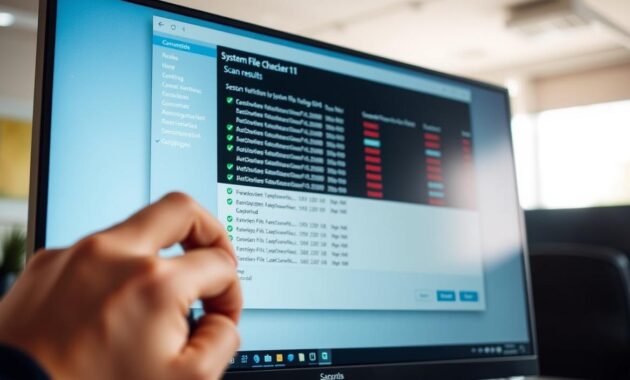
After the image repair completes, run the system file checker to confirm the operating files are sound. I use an elevated command prompt and type the exact command: sfc /scannow. Then I press Enter and watch the verification reach 100%.
Do not close the command prompt while the scan runs. Stopping it early can leave repairs incomplete and create more issues.
Understand the common Resource Protection messages
- No integrity violations: good — restart and test the original problem.
- Could not perform the requested operation: reboot to Safe Mode and check PendingDeletes and PendingRenames under %WinDir%\WinSxS\Temp, then rerun the scan.
- Repaired corrupt files: restart and monitor for recurrence.
- Found corrupt files but could not fix some: review C:\Windows\Logs\CBS\CBS.log for exact file names and replace with known-good copies if needed.
| Action | When to use | Next step |
|---|---|---|
| Run sfc /scannow | After image repair | Wait to 100%, then restart |
| Safe Mode scan | When operation fails | Check Temp folders, rerun scan |
| Inspect CBS.log | Unfixed files remain | Identify files and replace manually |
Sometimes a second pass finds more to repair. I usually rerun the file checker after fixes. That step often completes the recovery without drastic measures.
Conclusion
When your computer misbehaves, a stepwise repair routine usually finds and fixes the root cause.
Follow this simple flow: run a disk check first, then image checks, perform image repair, and finish with a file verification pass. This process saves time and reduces repeated corruption.
If the normal update path is broken, switch the repair source — that often turns a failing run into a successful recovery. After repair, reboot and test the original issue. Watch for returning problems over the next day or two.
Keep copies of CBS.log and use them to target anything still failing instead of guessing. Honestly, a calm, methodical approach is the fastest route to recovery and protects your data and system long term.
FAQ
When should I run the image servicing tool and what problems does it fix?
What signs indicate corrupted system files or image issues?
How is the image servicing tool different from the System File Checker?
How do I open an elevated Command Prompt or terminal to run these repairs?
Should I run a disk check before attempting image repairs?
What should I expect when CHKDSK runs on restart?
What is the quick health check command and when should I use it?
How does the deeper scan differ from the quick check?
What does a repair command do and why does the percentage stall sometimes?
How long will the repair process take?
Why does the tool use Windows Update as the default repair source?
What if Windows Update is broken—how can I change the repair source?
How do I pick a clean image path and avoid “source files could not be found”?
Should I run System File Checker after the repair, and why?
What do Windows Resource Protection messages mean after SFC finishes?
When should I rerun SFC, try Safe Mode, or inspect logs?

I’m Rodrigo Durães, founder of CareersForge — the world’s leading career platform — and recognized as one of the most comprehensive and experienced career and life coaches globally. With multiple academic degrees from the world’s top universities and over two decades of experience as a CEO, my mission is clear: to help people unlock their full professional potential through honest, strategic, and proven content.