
Ever thought about becoming a hypnotherapist? Wondered if it’s a quick weekend course or a long journey?

Table of Contents
Table of Contents
It really depends on what you choose. Hypnotherapy training can be short or take months or even years.
Most courses last a few days to a few months. They usually have around 140 hours of study. But, you also need to think about getting certified, doing supervised hours, and following state rules.
In this article, I’ll help you set realistic goals. I’ll talk about why training times vary. I’ll also explain the difference between course certificates and certifications from groups like the International Hypnosis Association. Plus, I’ll show you how to start your hypnotherapy career.
Before starting your journey, review our main guide on How to Become a Hypnotherapist
how long does it take to become a hypnotherapist
I get asked this question almost every week. The short answer depends on the route you choose and your goals. Some finish a basic certificate in days, while others take years to gain deep experience.
Typical overall time range
At the fast end, weekend intensives and modular courses can get you basic training in a few days to months. A common benchmark is a 140-hour program that you can finish in modular format over several weeks or months.


For part-time learners balancing work, most foundational programs plus supervised practice take roughly 6–12 months.
If you aim for advanced clinical credentials or a 1,000-hour pathway, expect multiple years. This extended period is about depth, supervised practice, and client hours.
Factors that shorten or lengthen the timeline
Intensive in-person modules and full-time study speed things up. Programs that bundle clinical observation and immediate exam eligibility shave weeks or months off your timeline.
Prior healthcare or counseling credentials often reduce extra requirements and let you skip certain supervised hours.
Part-time study, long independent study requirements, waiting for association-mandated supervised hours, and stacking specialty certificates extend the timeline. These add hours and administrative waits that push out becoming a certified hypnotherapist timeline.
How to set realistic expectations before you start training
Decide your end goal first: private practice, hospital integration, or adding hypnotherapy to an existing counseling license. Your target shapes the necessary training and the pace you need.
Check state laws and insurance expectations up front. Look at accreditation from recognized bodies like the National Guild of Hypnotists, the International Hypnosis Association, or RITMA when you compare programs.
Budget time for client practice, mentoring, and exam prep. Honestly, I realized pacing my learning with steady client sessions made me competent faster than cramming theory alone. That steady rhythm matters more than rushing through hours.
Overview of core hypnotherapy training programs and hours (hypnotherapy training hours)
I’ve seen programs ranging from weekend intensives to long clinical practicums. Your choice depends on your goals, schedule, and how fast you want to become a hypnotherapist.

Common program lengths and formats
Introductory courses usually last 16–40 hours. Core programs are 100–150 hours. Advanced tracks go even longer.
Formats vary. Intensives offer multi-day workshops. Online courses have weekly live sessions. Hybrid models mix live weekends with virtual sessions. Long-term mentorships add supervised practice over months.
Example curriculum breakdown: classroom, clinical, independent study
A typical 140-hour program includes:
- 30 hours of classroom learning on theory, inductions, and language patterns.
- 40 hours of clinical work with feedback from supervisors.
- 70 hours of independent study, practice logs, and reading.
Classroom days are full, from 9 AM to 4:30 PM with breaks. Observation sessions are online or in-person, where you assist and give feedback.
How training hours map to competence and hands-on practice
Classroom time lays the foundation. You learn techniques and safety. Clinical and observation hours provide live practice and feedback. Independent study helps you master scripts, ethics, and client planning.
Hours matter for certification, but practical experience grows skills faster. In my experience, ongoing supervised practice after basic training improves skills more than extra lectures.
Third-party certification vs. course certificate (hypnotherapist certification process)
I’ve helped many students after they finish training. They need to prove their skills to clients and insurers. A course certificate shows you’ve done a program and lists what you learned.
What a course certificate represents
A Certificate of Completion from a school, like Master Hypnotist Society Basic Hypnosis Training, shows you’ve been in class and passed tests. But it doesn’t mean you meet outside standards or insurance rules.
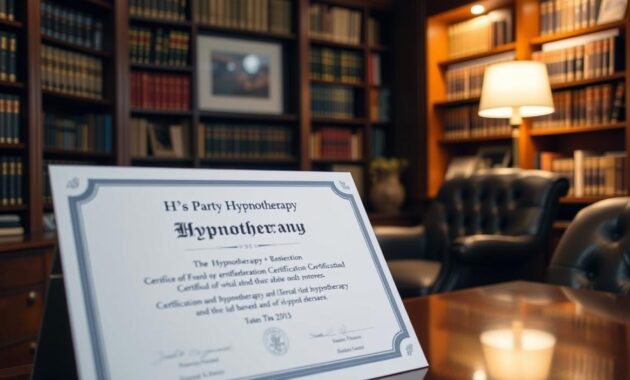
Third-party groups like the National Guild of Hypnotists check if your training meets standards. Being a member can make clients trust you more and get you discounts. Insurers and others often want this certification before they offer benefits or referrals.
Typical steps and time frame to obtain third-party certification
Getting certified usually involves a few steps. First, finish a recognized course. Then, submit your transcript or certificate. You might need to pass a written exam and provide client case logs or supervised hours.
I remember a student who got certified quickly. She passed the exam and got her membership in weeks. Another took three months to get approved because of client notes. These stories show how long it can take to get certified.
Here’s a quick comparison of paths, time, and costs. It helps set expectations for becoming a certified hypnotherapist.
| Step | Typical Time | Example Cost | Why it matters |
|---|---|---|---|
| Course completion and Certificate of Completion | 1 day to 3 months (course-dependent) | $300–$2,000 (course fees vary) | Documents training hours and curriculum topics |
| Apply for third-party membership | Days to weeks | $75–$250 (membership + processing) | Signals external validation and grants access to resources |
| Written exam (if required) | Scheduled within weeks to months | $0–$150 (exam fees vary) | Assesses core knowledge and professional standards |
| Submit supervised hours / case logs | Weeks to several months | No direct fee; supervision costs may apply | Demonstrates hands-on competence for higher-level certificates |
| Final certification & membership approval | Immediate to several months | Often included in membership; some upgrades cost more | Enables insurance discounts and boosts client confidence |
State regulations and licensing considerations for practicing hypnotherapy in the United States
I’ve helped many trainees start their clinics. State rules vary, impacting your career timeline.

In some states, hypnotherapy is not regulated. You can start paid sessions after finishing a course. But, other states require a license, making it harder to start.
Working in hospitals or with psychologists means you need extra credentials. You might need a counseling or medical license. I planned ahead to ensure clients didn’t wait.
Check state laws and professional board rules to understand your scope. Use intake forms and informed consent to outline limits and referrals.
For serious mental health or medical issues, refer clients to licensed professionals. I kept a list of trusted doctors and therapists. This practice keeps clients safe and my career on track.
Here’s a quick guide to help you plan. It shows different regulatory paths, needed credentials, and how they affect your start date and training time.
| Regulatory Track | Typical Credential Requirement | Impact on Start Date | Effect on hypnotherapist qualification period |
|---|---|---|---|
| Unregulated / Advisory guidance | Course certificate from accredited school | Start soon after completing training | Shorter; qualification often met with course hours and supervised practice |
| Regulated by health boards | Licensed clinician (LPC, LCSW, MD, DO) plus hypnotherapy credentials | Delayed until medical/mental health license obtained | Longer; hypnotherapy training duration stacks on top of clinical licensure requirements |
| Facility credentialing (hospitals, clinics) | Institutional privileging or formal affiliation | Dependent on facility processes and background checks | Qualification period may require supervised hours documented to meet facility standards |
| Insurance or malpractice requirements | Third-party certification, liability insurance | May delay billing and referrals until coverage is active | Can extend qualification timeline if extra coursework or supervised hours are requested |
Specialty training and advanced certification timelines (becoming a certified hypnotherapist timeline)
Many trainees start with basic certification and then focus on specialties. Picking a niche adds specific workshop hours and practice. This makes the overall training time longer.
Popular specialties and typical additional hours
Workshops on quitting smoking or losing weight are 8–20 hours. Modules on pain management and chronic diseases need 20–40 hours. HypnoBirthing® requires several days of training.
How specialty certificates add to marketability and timeline
Specialty certificates help you target specific client needs and charge more. They also help you build networks with healthcare providers. Each certificate adds hours to your timeline, affecting your path.
Stacking hours toward advanced or clinical certificates
Many programs let you use foundational hours for bigger credentials. For example, RITMA Groupe lets you combine hours for a 1,000-hour Advanced Clinical Hypnosis Certificate. This includes supervised practice and client work.
Some clinicians plan their path over several years. They start with the basics, then add specialties and practice. This way, they grow their career without rushing.
When planning, keep track of training hours and how they fit into advanced certificates. This makes your timeline realistic and keeps your education aligned with your goals.
Clinical practice requirements and supervised hours (hypnotherapist qualification period)
Training has moved from just classroom learning to real-world practice. Many programs need you to log supervised client hours, watch sessions, and write case studies. You’ll also get to see live client sessions or join online training every two weeks.
Supervision can be one-on-one, in groups, or weekly online. These sessions help you learn how to do inductions, deepening, and work with clients. Getting feedback from experts is key to improving your skills.
How many supervised hours you need varies by certificate. Basic ones might need fewer hours, while advanced ones require more. Some programs let you start supervised hours during class, while others wait until you finish the basics.
You’ll need to show proof of your hours, like session logs and supervisor feedback. I found getting regular feedback helped me gain confidence faster than practicing alone. This is why I tell students to focus on getting feedback during their training.
Plan your supervised hours carefully, considering your schedule and local rules. Use group sessions for focused learning and find experienced supervisors. Keeping accurate records helps you get certified faster and keeps you on track.
Cost, time investment, and practical scheduling (hypnotherapy education length)
I remember budgeting for my first training and learning how small choices changed the path. Understanding tuition, weekly hours, and certification costs helps you plan a realistic entry into practice. Below I share clear numbers and a schedule you can adapt.
Typical tuition ranges and payment plans for foundational courses
Foundational programs in the U.S. vary a lot. Some community or short courses cost a few hundred dollars. Accredited, multi-day programs often run from $1,000 to $4,000. A 140-hour program offered in Canada recently listed early-bird tuition near CAD $2,300–$2,500, which gives a useful benchmark for full programs.
Many schools offer early-bird discounts and monthly payment plans. If you choose in-person modules, factor in travel, lodging, and printed manuals. I recommend comparing what each price includes before you sign up.
Is the time investment worth it? See why hypnotherapy is a growing career choice.
Time commitment per week for classroom, clinical sessions, and independent study
For part-time learners expect to spend 5–15 hours per week. That total blends weekly classes, clinical practicum, independent study, and practice with clients. Intensive weekend formats compress classroom hours into full days, for example 9 AM–4:30 PM on Saturdays and Sundays.
Plan realistic weeks. I found blocking two evenings and one long weekend slot kept momentum without burning out. Track hours so your hypnotherapy training duration aligns with your other work or family demands.
Budgeting for certification exam fees, association membership, insurance
Extras push your start-up budget beyond tuition. Third-party certification exam fees can be a few hundred dollars. For example, National Guild of Hypnotists exam and first-year membership have appeared around $250 in some programs. Association dues, continuing education, and liability insurance add yearly costs.
Marketing and client materials are part of the mix. I suggest building a three-month financial plan while you complete coursework. That cushion covers exam fees, membership dues, and the first insurance premium so you can launch without scrambling.
| Expense | Estimated Range (U.S.) | Notes |
|---|---|---|
| Foundational course tuition | $300 – $4,000+ | Depends on accreditation, hours, instructor, and format |
| Travel & lodging (in-person modules) | $0 – $1,200 per module | Location and number of weekends drive costs |
| Payment plans / deposits | Deposit $100 – $500; monthly plans vary | Early-bird discounts reduce overall cost |
| Third-party certification exam | $150 – $400 | Example NGH-type fees around $250 in some offerings |
| Association membership | $50 – $250 per year | Often offers insurance discounts and listing benefits |
| Professional liability insurance | $100 – $400 per year | Discounts for association members common |
| Continuing education & specialty certificates | $100 – $1,500+ | Specialties add hours and marketability |
| Marketing & client materials | $200 – $2,000+ | Website, cards, booking systems, ad testing |
When you add tuition to extras, the total reflects both hypnotherapy education length and the broader hypnotherapist certification process. Your chosen schedule affects the hypnotherapy training duration and how quickly you can see paying clients.
Start by listing fixed costs, then map weekly hours. That simple plan keeps finances steady and time realistic as you move from training to practice.
Career launch steps and realistic first-year timeline after training (hypnotherapy training duration)
After finishing my core course, I felt both relieved and nervous. The first thing to do was to pass required exams and get certified. I also needed to get liability insurance and fill out intake forms and informed consent.
These steps were crucial for starting my practice legally and ethically. They helped me start seeing clients sooner.
Next, I joined a supervised client practice group. This was key to turning what I learned in class into real skills. It was a big part of becoming a qualified hypnotherapist and helped me gain confidence.
Marketing started early for me. I built a simple website and reached out to local healthcare providers and wellness centers. I also offered discounted sessions and workshops to gain experience and testimonials.
Here’s a realistic first-year timeline I’ve seen work in practice.
- Month 0–3: Finish certification applications, secure insurance, create intake paperwork, and launch basic marketing.
- Month 3–6: Start regular client sessions while continuing supervision and logging hours that count toward your hypnotherapist qualification period.
- Month 6–12: Refine specialties, increase client load, add targeted certificates, and begin steady referral growth.
Income can vary in the first year. Skilled practitioners can earn well, but growth depends on many factors. Focus on learning, marketing, and client work to move forward.
Keep learning through workshops, mentorship, and focused training. When I started, regular practice and mentorship helped me grow faster. This approach made me feel ready sooner.
Conclusion
How long it takes to become a hypnotherapist varies. You can start in a few weeks to months. Most programs last about 140 hours.
After that, you need supervised practice and to get certified. This can take several months. If you want to specialize, it might take years, up to 1,000 hours.
What’s important is to take the next steps. First, decide what you want to achieve. Then, check if your state has rules. Look for recognized certifiers like the National Guild of Hypnotists.
Choose a good training program and plan your practice hours. Don’t forget to budget for exams and insurance. These steps help you start working with clients sooner.
I’ve seen people speed up by starting practice early and focusing on one specialty at a time. Create a realistic plan, start with the basics, and gain experience. At CareersForge, we support you every step of the way. Our training and practice help you become a skilled and ethical hypnotherapist.
FAQ
How long does it take to become a hypnotherapist? Training & licensing timeline.
Typical overall time range: how long does it take to become a hypnotherapist?
What factors shorten or lengthen the timeline to practice professionally?
How should I set realistic expectations before I start training?
What are common program lengths and formats for hypnotherapy training? (hypnotherapy training hours)
Can you give an example curriculum breakdown for a 140-hour program?
How do training hours map to real competence and hands-on skill?
What does a course certificate represent?
Why does independent third-party certification matter for credibility and insurance? (hypnotherapist certification process)
What are the typical steps and time frame to obtain third-party certification?
How do U.S. state laws affect how quickly I can start practicing hypnotherapy?
When are additional credentials (counseling, medical) required to practice hypnotherapy?
How should I verify scope of practice and write disclaimers for clients?
What are common specialties and approximate additional hours for certifications? (becoming a certified hypnotherapist timeline)
How do specialty certificates affect my timeline and marketability?
Can training hours stack toward advanced or clinical certificates (example: 1000-hour pathways)?
What are typical clinical practice requirements and supervised hours? (hypnotherapist qualification period)
How are supervision formats delivered and why are they important?
What are typical tuition ranges and payment options for foundational hypnotherapy courses? (hypnotherapy education length)
How much time per week should I expect to commit when training part-time?
What extra costs should I budget for beyond tuition?
What should I do immediately after finishing a training program?
What is a realistic first-year timeline after training to launch a hypnotherapy practice? (hypnotherapy training duration)
Any practical advice for accelerating competence and confidence?

I’m Rodrigo Durães, founder of CareersForge — the world’s leading career platform — and recognized as one of the most comprehensive and experienced career and life coaches globally. With multiple academic degrees from the world’s top universities and over two decades of experience as a CEO, my mission is clear: to help people unlock their full professional potential through honest, strategic, and proven content.