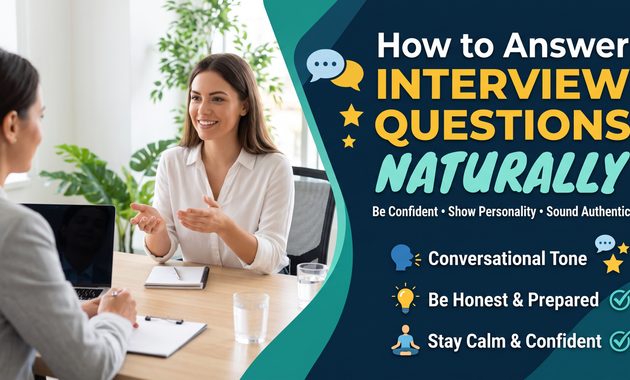
Knowing how to answer interview questions naturally is one of the fastest ways to stand out from candidates who sound like they are reciting memorized lines. When responses feel overly scripted, hiring managers struggle to connect with your real personality and judgment. In this edition of CareersForge Career Field Notes, hosts Rodrigo and Maya walk through five common interview questions and answers and share conversational frameworks grounded in your real experience.
Treat each example below as a starting point, not a rigid script. Swap in your own genuine projects, use interview answer practice to test your pacing aloud, and leave room for a natural two-way conversation.
1. "Tell Me About Yourself" Without Reciting Your Resume
One of the biggest mistakes candidates make in the opening minutes is walking through their entire chronological work history. If you want a deeper breakdown of how to answer "Tell me about yourself" in an interview, start directly with the part of your recent work that aligns best with the target role, share one concrete example, and pause so the interviewer can guide the next question.
Conversational Answer Framework
"I've been focused on [relevant responsibility]. One example is [a real project or contribution]. Now I'm looking for a role where I can build on that."
Why it works: You immediately establish relevance in three concise sentences and invite the interviewer to dig deeper into the exact experience they care about most.
2. "Why Are You Interested in This Role?"
Skip the grand, overly polished corporate speech. Hiring managers respond far better when you point to one specific aspect of the day-to-day work that genuinely motivates you and connect it to something you have already enjoyed doing.
Conversational Answer Framework
"This role includes [specific responsibility]. I liked [related task] because [real reason], and I'd like to do more of it."
Why it works: Grounding your motivation in an actual task gives the interviewer a concrete hook to ask follow-up questions about how you work.
3. "Describe a Challenge You Faced at Work"
Behavioral stories often lose momentum when candidates spend too much time explaining background context. Keep the setup to a single sentence, stay focused on your individual actions, and highlight the practical adjustment you made when things didn't go as planned.
Conversational Answer Framework
"We were dealing with [specific challenge]. I was responsible for [your piece of the work]. I tried [initial action], but when [obstacle] came up, I [adjustment made]. The result was [observable change]."
Why it works: You don't always need a dramatic statistical metric—what interviewers look for is clear ownership, adaptability under pressure, and a visible positive outcome.
4. "What Is a Weakness You Are Currently Improving?"
Disguising a strength as a flaw ("I work too hard" or "I'm a perfectionist") rarely convinces experienced interviewers. Choose a genuine, manageable habit you are actively working on and show the concrete system you put in place to improve it.
Conversational Answer Framework
"I used to wait too long to ask for feedback. Now I share an early draft and ask one focused question."
Why it works: Use an example like this only if it truly reflects your experience. Demonstrating self-awareness alongside an active habit change signals coachability and maturity.
5. "What Questions Do You Have for Us?"
An interview is a two-way evaluation—you are also assessing whether the team and role are the right fit for you. Exploring the top questions to ask an interviewer helps you pick one you genuinely want answered rather than reciting generic questions from a checklist.
Two High-Impact Questions to Ask
- "What would you hope this person has accomplished in the first 90 days?" — Clarifies immediate expectations and how success is measured early on.
- "How does the team handle competing priorities?" — Reveals how leadership communicates, manages workload, and supports collaboration under pressure.
Quick Summary: How to Answer Interview Questions Naturally
| Interview Question | Core Strategy | Key Focus |
|---|---|---|
| Tell me about yourself | Start with relevant recent work + 1 example | Relevance & brevity |
| Why this role? | Connect a real task you enjoy to the job | Authentic motivation |
| Describe a challenge | 1-sentence setup + your action & adjustment | Ownership & adaptability |
| What is your weakness? | Name a real habit + the fix you use today | Self-awareness & growth |
| Questions for the interviewer | Ask about 90-day goals or team priorities | Two-way role fit |
About This Episode
Rodrigo and Maya walk through five common interview questions and model answer frameworks that sound like a real conversation, not a memorized script. Replace every bracketed prompt with details that are true for you; these are examples to adapt, not claims about Maya's personal work history.
Episode Chapters
- 00:00 — Introduction
- 00:13 — Tell me about yourself
- 00:38 — Why this role?
- 00:57 — Describe a challenge
- 01:23 — A weakness you're improving
- 01:43 — What to ask at the end
- 02:05 — Closing
Disclaimer: This episode uses AI-generated avatar voices for Rodrigo and Maya. CareersForge provides general career education; no hiring outcome is guaranteed.
Maya
Turn this episode into your next career move.
Bring your question to Ignis, or explore our practical career guides.