
Wondering if your hands-on tech experience can really translate into leadership? I asked myself that same question when I first moved from systems work into management. The short answer: yes—but it takes a clear plan, practical wins, and the right credentials.
I’ll show you the exact path I used to help people move from hands-on roles into a management role. You’ll learn how a degree, targeted certifications, and real projects stack together to signal readiness for larger responsibilities.
FREE TOOL FOR THIS TOPIC
IT Manager Career Roadmap
Built specifically for readers of How to Become an IT Manager: Career Roadmap. Answer four quick questions to receive a focused result immediately—no email required.
IT Manager Career Roadmap
Identify your next skills and milestones for moving into IT management.
Continue building your career
Use another free CareersForge resource to turn this result into your next application, resume or interview step.
You’ll map current experience to the skills and leadership behaviors hiring teams want. I’ll also point out low-cost learning options and a free certification program that keeps your momentum without pausing your career.


By the end, you will know the steps, timeline, and proof points that move you from contributor to manager with confidence. Honestly, this is the roadmap I wish I had when I started and how to become a it manager.
Table of Contents
Key Takeaways
- Clear path: degree, certifications, and project experience create credibility.
- Translate technical wins into leadership stories that matter to executives.
- Targeted certifications and a free program can accelerate promotion chances.
- Focus on measurable impact: uptime, performance, incident reduction.
- Use a simple weekly routine to track growth and prepare for interviews.
IT Management Today: Why This Career Matters in the United States
I’ve seen organizations win or stall based on the strength of their management. When managers align systems and information with business priorities, work moves faster and risks fall.
U.S. employers rely on leaders who plan, direct, and oversee computer and information systems. The Bureau of Labor Statistics projects 15% growth in roles for computer and information systems managers from 2022 to 2032.
Pay reflects responsibility: Lightcast reports an average salary near $170,853, driven by duties that protect data, uptime, and budgets from cyber threats and downtime.
- Good management keeps infrastructure stable and compliant.
- Strong managers bridge technology and business across teams.
- Leaders translate information into funding, retirement, and risk decisions.
| Metric | Why it matters | Impact |
|---|---|---|
| Growth (15%) | More digital projects across finance and operations | Higher demand for leadership and project management |
| Avg. Salary | Reflects risk and responsibility for uptime and security | Incentive for career investment and degree/certification |
| Core focus | Systems, network, infrastructure, and information governance | Resilient services, reduced outages, stronger trust |
📚 Read Next
Secure Your Role: Management is safer than execution. Learn why in our guide on How to Make My Job AI Proof.
Technical Skills: A good manager understands the tools. Familiarize yourself with cloud standards by reading AWS or Azure Certification Guide.
Leadership Data: According to Gartner, the most successful IT managers in 2026 will be those who can bridge the gap between AI automation and human strategy.
What an IT Manager Does: Role, Responsibilities, and Impact
An effective IT leader balances daily reliability with long-term platform change. I plan, direct, and oversee computer and information systems so the company can run without surprises.
Operational vs. Strategic
In operational mode, I focus on availability: runbooks, routine patching, and fast incident response so teams keep working. That keeps systems stable and predictable.
In strategic mode, I lead projects that modernize platforms, reduce technical debt, and map investments to business outcomes. Roadmaps turn information into measurable change.
Daily Tasks: From network security to project oversight
- Review alerts and performance dashboards.
- Clear blockers for the team and prioritize the ticket queue.
- Test backups, validate recovery plans, and coordinate security patches.
- Translate stakeholder requirements into systems changes and project scopes.
Driving digital transformation, uptime, and risk reduction
I negotiate vendor SLAs, evaluate software fit, and hold partners accountable when security or performance lags. Network reliability and software quality both matter.
Strong managers coach through context, not control—setting priorities, defining done, and celebrating steady wins.
How to Become a IT Manager
Start with a clear education plan and practical steps that prove your readiness for leadership. I recommend pairing formal education with measurable wins so hiring teams can see impact.

Start with education: bachelor degree in information systems or computer science
Employers usually expect at least a bachelor degree in information technology, information systems, or computer science. A solid bachelor program builds fundamentals in networks, systems, and data that pay off in operations and strategy.
Gain hands-on experience in support, systems, and network roles
Target support, systems admin, or network admin roles to develop troubleshooting and documentation habits. Those roles create real production experience and credibility.
Develop leadership and project management skills on real projects
Volunteer to lead a small upgrade or coordinate a rollout. Running one project shows project management and leadership skills faster than waiting for a title change.
Earn high-value certifications to validate technical and management skills
Pursue certifications that match your goals: PMP or CAPM for delivery, ITIL for service, and a security cert for stewardship. These credentials make your experience easier to verify.
Build a professional network and pursue mentorship
Ask a respected manager for monthly mentorship, track your progress, and keep a simple portfolio with before/after metrics. If you want to accelerate, consider a master or graduate degree later.
Core Skills for IT Managers: Technical Knowledge, Leadership, and Project Management
Strong managers blend broad systems knowledge with clear people skills that move projects forward. I look for a balanced stack: enough technical knowledge to ask sharp questions and the leadership to turn complexity into clear plans.

Technical foundation
Build practical skills across infrastructure, systems, networks, cloud, and information security. Learn where bottlenecks form and how security layers protect data without blocking delivery.
Leadership and communication
Leadership is practice. Run focused standups, coach through obstacles, and communicate trade-offs. If stakeholders understand risks and benefits, they back the plan and share ownership.
Project management skills
Adopt Agile and Scrum practices that keep teams steady. Add budgeting, risk, and quality checks so projects finish on time and meet business goals.
- Make simple playbooks: rollouts, training, and feedback loops.
- Turn experience into repeatable frameworks: postmortems and risk registers.
- Prioritize time management and stakeholder updates.
These combined skills reduce surprise, align work with the organization, and create reliable delivery. Build them deliberately and document the wins so your experience scales across teams and projects.
Education Paths & Certifications That Accelerate Your Career
A clear stack of degrees and certifications turns everyday wins into hireable proof. Start by picking a bachelor path that matches how you like to work. Information technology gives breadth. Information systems aligns work with business. Computer science builds engineering depth.
Bachelor choices and what they buy you
If you want faster leadership access, pair a solid bachelor with real projects. Employers often expect a degree in one of these areas and value practical labs and internships.
Graduate options that widen the doorway
Consider a master or a master degree in IT management or an MBA with an IT focus. A graduate degree sharpens decision frameworks and opens senior roles faster.
Key certifications and continual learning
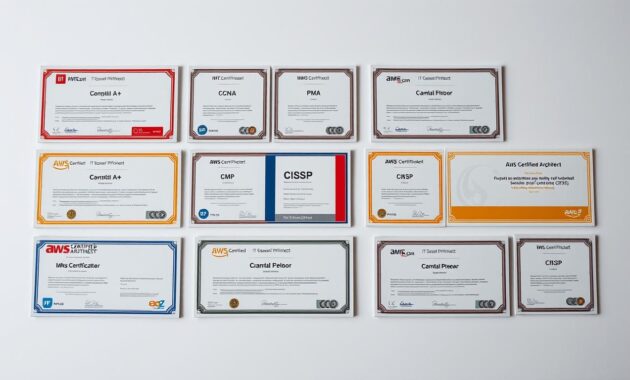
Stack certifications with intent: PMP or CAPM for project management credibility, CISM or CISSP for security leadership, and ITIL for service maturity. Use CAPM or CompTIA Project+ early if you need formal delivery experience.
- Pick programs that include lab work and exam prep vouchers.
- Mix coursework with short projects at work so learning sticks.
- Keep a quarterly cadence of workshops and micro-courses.
Translate each credential into value. Publish a short process guide, lead a small rollout, or mentor a teammate using what you learned. That’s what turns certificates into real career momentum.
Career Progression, Salary, and Job Outlook in the United States
Career steps from support desks up to project leadership often follow a clear, measurable rhythm.
Entry roles usually include IT support, systems specialist, and network administrator. In many organizations you move from those roles into an IT project lead within 3–5 years after finishing a degree.
Entry-level to leadership
I’ve coached a common path: year one in support or systems, year two expanding operations, year three running projects, and then a manager role once you show impact.
Impact that matters: incident reduction, upgrade delivery, and stakeholder alignment. Those outcomes convince hiring panels you can lead work across the business.
Earning potential
Lightcast reports an average U.S. salary near $170,853 for computer and information systems managers. Salary bands track responsibility for reliability and change, so document measurable wins when you negotiate.
Job growth and demand
The U.S. Bureau of Labor Statistics projects 15% growth from 2022 to 2032 for these roles. That pace outstrips many occupations and keeps demand strong for capable managers who can guide modernization safely.
- If you hit a ceiling, seek internal rotations in security, cloud, or data.
- Build leadership artifacts: roadmaps, risk registers, and dashboards you own.
- Work with your organization on a development plan tied to role outcomes.
| Stage | Typical timeline | Key proof points |
|---|---|---|
| Support / Systems | Year 0–1 | Ticket resolution, runbooks, documentation |
| Operations / Broad systems | Year 1–2 | Patch cadence, uptime metrics, SLA adherence |
| Project lead | Year 2–3 | Delivered upgrades, stakeholder alignment, budget tracking |
| Manager | 3–5 years | Team outcomes, roadmaps, reduced incidents, certified skills |
Tools of the Trade: Software and Platforms Every IT Manager Should Know
The right software stack turns chaotic projects into predictable outcomes. I pick platforms that make work visible and keep the team aligned with business goals.
Project and work management tools like Jira, Trello, and Microsoft Project help visualize timelines and tame dependencies. Use Jira or Microsoft Project for complex project tracking and stakeholder reporting. Use Trello for lightweight intake and quick wins that should not get lost in email.
Automation, security, and monitoring matter for stable systems and network health. Ansible removes repetitive toil. SolarWinds gives a broad view of infrastructure and network performance. Wireshark digs packet-level truth and Splunk turns logs into security and reliability answers.
Help desk and documentation keep support reliable. Zendesk Support creates clean intake and SLA control. Keep runbooks, change logs, and architecture diagrams in Adobe Document Cloud or Revver so information stays versioned and accessible.
- Standardize workflows: discipline beats feature lists—measure SLIs and coach the team.
- Automate routine tasks: fewer manual steps = fewer outages and faster projects.
- Bridge tech and business: use tools that make value visible to stakeholders.
| Category | Examples | Primary use | Quick benefit |
|---|---|---|---|
| Project management | Jira, Microsoft Project, Trello | Plan, track, and report projects | Clear timelines and fewer missed milestones |
| Automation & monitoring | Ansible, SolarWinds | Automate configs; monitor network and systems | Less manual toil and faster incident detection |
| Security & observability | Wireshark, Splunk | Packet analysis; log search and correlation | Faster root cause and improved security posture |
| Support & docs | Zendesk Support, Adobe Document Cloud, Revver | Help desk operations and versioned documentation | Faster resolutions and safer knowledge transfer |
Conclusion
Turn your daily wins into clear signals that hiring teams can trust. Anchor your plan in three levers: visible delivery on projects, steady growth in people leadership, and tight alignment with business goals.
Build knowledge with a bachelor degree and targeted certifications, then prove impact by stabilizing systems, improving infrastructure, and cutting incidents. Set quarterly goals: one service uplift, one automation, one coaching win.
Honestly, reach for scope. Lead a cross-team project, pitch a program that reduces outages, and show the company you already act like a manager. That blend of education, measurable experience, and clear stories gets promotions moving.
FAQ
What education path sets the strongest foundation for an IT management career?
Which entry-level roles build the best hands-on experience for future managers?
What certifications deliver the most value for both technical and leadership credibility?
How important are project management skills for this role?
What technical areas should I know well before applying for manager roles?
How do I demonstrate leadership if I’m still in an individual contributor role?
What salary range can professionals expect in the United States?
Which tools should I learn first to be effective on day one as a manager?
How do I transition from technical lead to people manager without losing technical credibility?
Is mentorship important, and where can I find mentors?
Should I pursue an MBA or a technical master’s for long-term growth?
What common mistakes slow down advancement into management?
How do I prepare for job interviews for IT management positions?
What continuing education strategies keep managers competitive?
How can managers balance security needs with business speed?
What are realistic next steps for someone ready to move into management this year?

I’m Rodrigo Durães, founder of CareersForge — the world’s leading career platform — and recognized as one of the most comprehensive and experienced career and life coaches globally. With multiple academic degrees from the world’s top universities and over two decades of experience as a CEO, my mission is clear: to help people unlock their full professional potential through honest, strategic, and proven content.