
Do you believe a fifteen-minute check-in can actually boost trust, cut surprises, and speed up decisions?
I’ve seen calendars packed and days full of context switches. Managers still must coach, support growth, and keep people engaged. That pressure is why a short, repeatable structure matters.
FREE TOOL FOR THIS TOPIC
One-on-One Meeting Planner
Built specifically for readers of Perfect One-on-One Meeting Agenda: 15-Minute Template. Answer four quick questions to receive a focused result immediately—no email required.
One-on-One Meeting Planner
Create a focused agenda for a useful one-on-one meeting.
Continue building your career
Use another free CareersForge resource to turn this result into your next application, resume or interview step.
By “Perfect One-on-One Meeting Agend” I mean a consistent, human approach—not a flawless script. It’s a simple agenda you can use weekly to open space for honest talk, not just status updates.



This guide gives a six-block, timeboxed template that fits a 15-minute slot. Use it whether your team is in-office, remote, or hybrid. The aim is clearer priorities, faster unblocking, and better career momentum.

🎓 CareersForge Note: This guide is part of the study material for our Leadership & Management Certification. If you want to go deeper, you can continue learning with our full online course – including lessons, templates, and a final assessment that unlocks your official CareersForge Leadership Certificate.
Stick with this format and you’ll spend less time wrestling calendars and more time helping people grow. I’ll also point to a short free course if you want a deeper system.
Why one-on-one meetings matter for managers and employees right now
Hybrid schedules and fast reorganizations make casual check-ins rare—and risky. When hallway chats disappear, small problems grow into bigger issues that affect day-to-day work.
Regular meetings create a private space for candid talk. Gallup shows weekly feedback lifts motivation and engagement. That small rhythm builds trust and improves retention.
I’ve watched managers say, “I thought they were fine—until they resigned.” Regular check-ins reduce those blind spots by surfacing concerns early.
- Why now: hybrid work and quieter burnout signals mean you can’t rely on chance conversations.
- Trust to retention: when employees know where they stand, they disengage less and stay longer.
- Real conversations vs status: status updates track tasks; true check-ins focus on how the work is going and what’s hard.
- The feedback gap: Leapsome finds 71% of managers say they give constructive feedback, but only 37% of individual contributors agree.
Small, frequent feedback moments keep surprises out of reviews and raise team energy. When people feel heard, engagement follows—and the whole group does better.
What a one-on-one meeting is and what it’s not
Good 1:1 time creates a private space for the employee to raise coaching needs, context questions, and real problems. I treat this as the employee’s hour: they set the top topics, and I bring context, decisions, and coaching.
What it is: a protected, open-ended check-in for development, role clarity, and problem-solving. Use it to surface workload strain, career goals, collaboration issues, and confidence after setbacks.
What it isn’t: not a team briefing, not a performance interrogation, and not a squeezed status update. If tactical project details dominate, create a separate sync.
The employee-focused purpose
Keep the meeting employee-driven. Let them lead with priorities. The manager listens, coaches, and removes blockers.
When to use skip-levels and mentor formats
Skip-levels help spot org friction, morale trends, or strategy confusion. Mentor 1:1s focus on career storytelling and skill development without evaluation pressures.
| Format | Primary goal | Typical topics |
|---|---|---|
| Direct 1:1 | Coaching & support | Priorities, blockers, development |
| Skip-level | Org health & trends | Morale, process friction, alignment |
| Mentor session | Career growth | Skills, storytelling, long-term goals |
Set the cadence and logistics that make one meetings stick
Rhythm is the secret weapon that keeps support predictable for every team member.
Weekly as the default: I recommend weekly check-ins for most manager-report pairs. A weekly cadence keeps small issues from growing and makes feedback timely.
When biweekly works: Use biweekly if you manage many people, collaborate closely day-to-day, or the role needs little coaching. Guard against “two-week amnesia” by sharing quick interim notes.
Monthly is the exception: Too much changes in a month. If you slip to monthly, add short asynchronous updates so priorities don’t drift.
Picking the richest medium
Face-to-face is best for nuance and trust. When that isn’t possible, use video to capture nonverbal cues. Audio-only should be a fallback, not the norm.
Walking sessions work well once trust is built. They ease tension and invite more honest feedback.
- Protect the slot: don’t let reschedules become routine—rescheduling sends a message.
- Create privacy: a quiet room or closed video session improves candor.
| Choice | When to use | Benefit |
|---|---|---|
| Weekly in-person | High collaboration or active coaching | Fast feedback, stronger rapport |
| Biweekly video | Large spans or steady workflows | Balanced time use, visual cues retained |
| Walking or informal | Established trust, sensitive topics | Reduces formality, invites honest talk |
Prep in minutes: build a shared agenda with talking points
A two-minute prep habit turns vague check-ins into focused conversations. I ask for a quick scan before each meeting so neither of us arrives guessing. Preparation improves focus and makes the time practical.
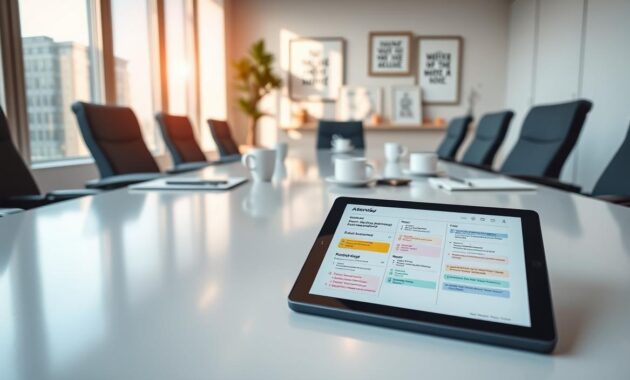
The first meeting sets the tone, but consistency is what builds trust. Now that you’ve broken the ice, learn how to maintain momentum with our guide on How to Effectively Run a One-on-One for the long term.
Review last week’s notes, action items, and goal progress
Glance at prior notes, tick off action items, and note any goal progress. That simple step reduces recency bias and keeps continuity.
Share talking points ahead of time to make it employee-driven
Ask your team members to add their talking points to a shared doc. When people add topics ahead of time, the meeting becomes employee-led and less stressful.
Pre-populate priorities, blockers, and development topics
Pre-fill top priorities and tasks you need to discuss. Add one development topic so growth stays in view. Use talking points, not a script—leave space for real conversation.
- Quick routine: glance notes, scan action items, check goals.
- Shared agenda format: two columns — “Employee topics” and “Manager topics.”
- Guardrail: use bullets, not scripts; keep the meeting human.
| Step | What to check | Time |
|---|---|---|
| 1 | Notes & action items | 1 min |
| 2 | Goal progress | 1 min |
| 3 | Top priorities & blockers | 1 min |
Prep like this builds trust. When you remember details from last week, people feel seen—and the meeting actually moves work forward.
Perfect One-on-One Meeting Agend: the 15-minute template
Start by treating the 15-minute slot as a clear spine for the conversation, not a checklist to be raced through. The goal is steady rhythm: quick human check-ins, focused updates, and clear follow-ups.
Quick personal check-in to open the conversation
Spend 1–2 minutes asking how they are. A brief human moment improves trust and sets tone.
Progress and priorities: what moved forward since the last meeting
Take 4 minutes for a tight update: what moved, what stalled, and the top priority for the next week.
Roadblocks and support: what’s stuck and what the manager can do
Use 4 minutes to name the blocker and agree the kind of support needed—decision, resource, or influence. Commit to one concrete action.
Feedback and recognition: candid coaching in real time
Spend 2 minutes giving a short, specific piece of feedback and a recognition. Normalizing feedback keeps reviews from feeling surprising.
Career development micro-moment: growth, skills, and aspirations
Use 1–2 minutes to pick one small development step—course, practice, or stretch task—that compounds over time.
Next steps: capture action items, owners, and deadlines
Finish with a 1–2 minute recap. List action items, owners, and deadlines so nothing fades away.
| Segment | Minutes | Outcome |
|---|---|---|
| Check-in | 1–2 | Rapport |
| Progress & priorities | 4 | Alignment |
| Roadblocks & support | 4 | One committed action |
| Feedback & growth | 3–4 | Coaching + development |
| Next steps | 1–2 | Clear action items |
Talking points to rotate week to week without losing focus
Rotate the focus each week so conversations stay fresh and useful. A simple rotation protects Julie Zhuo’s four pillars: reflect on how work is going, discuss priorities, share feedback, and plan development.

Struggling to fill the discussion slots in your agenda? Choose from our list of 150+ One-on-One Meeting Questions to ensure you never run out of topics.
Reflecting on how work is going for the employee
Ask about motivation, friction, confidence, and relationships—not just task status. A short prompt like “What drained or energized you this week?” reveals real signals you can act on.
Discussing top priorities and alignment with team goals
Connect their top tasks to team goals so work feels meaningful. Use a minute to confirm the highest priority and one sentence on how it ties to the team’s objectives.
Sharing feedback upward and downward
Normalize two-way feedback. Invite upward feedback with a neutral question and listen without defensiveness. Then share one clear, specific observation the employee can use immediately.
Development and learning plans that compound over time
Make small monthly skill bets: presenting, stakeholder management, or technical depth. Over months, these tiny bets become visible growth.
- Week A: workload + energy
- Week B: priorities + alignment
- Week C: feedback (up & down)
- Week D: development + learning
If a crisis hits, skip the rotation. Use the pillars as a map to return to balance when normal work resumes.
| Week | Focus | Quick prompt |
|---|---|---|
| Week A | Workload & energy | “What drained or energized you?” |
| Week B | Priorities & goals | “Which task moves our team goal forward?” |
| Week C | Feedback | “What should I start, stop, or change?” |
| Week D | Development | “What small skill will compound this month?” |
High-impact one-on-one meeting questions for managers and employees
A handful of sharp prompts can reveal stress, blockers, and buried goals. Use these to open honest conversation fast and make the 15 minutes count.
Openers that surface what’s really on their mind
Try quick, human starters: “How are you feeling?” or “What’s on your mind?” These invite real answers, not rehearsed updates.
Questions that uncover blockers, workload issues, and support needs
Ask: “What’s blocking you?” and “How can I help?” Managers should focus on removing friction without micromanaging.
Feedback questions that improve performance without surprises
Use two-way prompts: “Do you have feedback for me?” and “What should I start, stop, or change?” Short, specific feedback prevents surprises at review time.
Career development questions that clarify goals and growth
Translate ambition into action with: “Where do you see yourself in two years?” and “What skills do you want to develop?” Follow with one small next step.
| Use | Sample question | Outcome |
|---|---|---|
| Opener | How are you feeling? | Honest tone |
| Blocker | What’s blocking you? | Fast unblock |
| Feedback | Do you have feedback for me? | Two-way trust |
Listen actively and act. The best question fails without follow-through—capture the action and return to it next time.
How to run a first 1:1 meeting that sets expectations fast
Open with a simple promise: this time is for their priorities and growth. Say it out loud so the tone is clear from the start. That small line signals psychological safety and shows the meeting will not be a status update.
Getting-to-know-you prompts that build rapport
Ask quick, higher-value prompts: what drains your energy, what motivates you, and what makes a great week for you?
These questions go beyond small talk. They reveal patterns I can act on as a manager.
Clarifying the role, working style, and what “support” means
Define success in the role in plain terms. Explain how performance is judged and where they can ask for context.
Spell out support categories: unblocking, prioritization, feedback, and advocacy. Naming these helps people ask clearly.
Agreeing on rhythm, agenda ownership, and success measures
Propose a cadence—weekly is the default; biweekly works if needed. Protect the slot with a recurring invite and a stable video link for hybrid work.
Agree that the employee drives the agenda and the manager delivers coaching and follow-through.
- Tone-setter: define candor and how problems are raised.
- Agenda ownership: employee lists top points before the meeting.
- Success measures: fewer surprises, faster unblocks, clearer priorities over the next few weeks.
| Topic | What to confirm | Outcome |
|---|---|---|
| Working style | Preferred feedback and focus windows | Fewer misreads |
| Role clarity | Key goals and expectations | Aligned priorities |
| Cadence | Weekly or biweekly, recurring invite | Protected time |
Turn conversation into action: notes, action items, and follow-up
Close the chat with crisp outcomes so nobody walks away guessing. I end every meeting with a 60-second recap that names decisions, owners, and due dates. That short habit prevents the classic “I thought you meant…” problem and keeps work moving.
How to summarize outcomes to prevent misunderstandings
At the end, state the agreed action and who owns it. Say it aloud, then type a one-line recap into the shared doc. This makes commitments visible and reduces friction.
Tracking action items and revisiting them every week
I track action items in a simple table with owner and due date. Revisit the list each week so small steps become reliable progress. Weekly review builds credibility fast.
| What | Owner | Due |
|---|---|---|
| Approve budget request | Manager | Thu |
| Intro to stakeholder | Employee | Mon |
| Draft plan | Employee | Next week |
Private vs. shared notes and what should stay “off the record”
Share notes that record decisions, commitments, and resources promised. Keep coaching reflections and sensitive patterns private.
If someone shares something off the record, respect it. Use discretion and, when needed, point them to HR or an appropriate safe path. Transparent notes help make performance fairer by reducing recency bias in reviews.
- Send any promised intro or approval within 24 hours.
- Mark sensitive observations as private and follow up verbally.
- Document discussions respectfully so people feel heard and action occurs.
Simple tools and templates to keep one-on-ones consistent across the team
A simple setup can turn inconsistent check-ins into dependable coaching moments. Start small, then add features only when the team needs them.

Calendar + doc basics vs. dedicated 1:1 software
A recurring calendar invite plus a shared doc or notebook covers most needs. It’s fast to adopt, low cost, and keeps an easy record of agenda items and goals.
Dedicated 1:1 software adds shared and private notes, customizable templates, and direct performance context. Use it when you need searchable history, reporting, or company-wide standards.
What to look for: shared agendas, templates, and performance context
- Shared agendas: let members add topics before the meeting.
- Reusable templates: short templates save time and keep focus on progress and goals.
- Performance context: quick access to goals and prior notes prevents replaying the same info.
How HR and leadership can support a healthy 1:1 culture
Leaders must model the habit. When the company treats these check-ins as optional, they fade. Use engagement surveys, exit interviews, and 360 feedback to build a case for adoption.
Monitor adoption gently: are meetings scheduled, are templates used, and do managers get nudges when check-ins slip? That data guides coaching without policing conversations.
| Setup | When it’s enough | Key benefit |
|---|---|---|
| Calendar + shared doc | Small teams, quick start | Low friction, visible agenda |
| Dedicated 1:1 software | Growing teams, reporting needs | Private notes, templates, performance links |
| Hybrid approach | Scaling company | Best of both: familiarity + structure |
OPM recommends regular supervisor-employee check-ins to review progress, resolve challenges, and offer support. OPM guidance on regular supervisor-employee check-ins.
Conclusion
Consistency beats length: weekly or biweekly meetings create clarity and momentum more than long, rare sessions. Use the 15-minute template as a simple mental model: connect as humans, align priorities, unblock, coach, invest in development, and lock next steps.
If you have only 15 minutes, make that time build trust and clarity—not chase status updates. Come prepared with three smart questions and a short shared agenda doc.
Start small next week: pick a cadence, try the template, and iterate. Frequent feedback lifts engagement and cuts surprises. People remember whether they felt supported far more than every task you assigned.
Honestly, I learned that the habit matters more than the script. Protect the time, follow up, and watch goals and retention improve.
FAQ
What is the purpose of a 15-minute 1:1 template for managers?
How often should I schedule one-on-one meetings with direct reports?
Who should drive the agenda: manager or employee?
What are the essential sections of a 15-minute check-in?
How do I capture and track action items effectively?
Should one-on-ones be in-person or virtual?
How do I handle sensitive topics or off-the-record conversations?
What questions should managers ask to uncover blockers and workload issues?
How much preparation should each person do before a meeting?
How can managers give effective feedback in a brief check-in?
When should I use skip-level meetings or a mentor format instead of a regular 1:1?
What tools work best for consistent one-on-one notes and agendas?
How do I rotate talking points without losing focus?
How do I run a first meeting that sets expectations clearly?
What should a manager do when an employee raises a problem they can’t solve in the meeting?

I’m Rodrigo Durães, founder of CareersForge — the world’s leading career platform — and recognized as one of the most comprehensive and experienced career and life coaches globally. With multiple academic degrees from the world’s top universities and over two decades of experience as a CEO, my mission is clear: to help people unlock their full professional potential through honest, strategic, and proven content.