
Question: Have you ever wondered why a talented person gets passed over for a booking when they seem perfect on paper?
I define these needs as a mix of fit, consistency, and the ability to book—not a beauty contest. Honestly, agencies in the U.S. sort applications by height, then sample size, then overall look.
Most of these standards exist because of clothes, clients, and budgets—not to be cruel. I’ll preview the 12 real checks you’ll read next: height, sample size fit, proportions, grooming, digitals, professionalism, social presence, and agency legitimacy.
I’ve seen great talent fall short for one avoidable reason: missing stats, inconsistent sizing, or messy submissions. We’ll fix that with clear, practical steps.
This is a how-to guide for building a lasting career in the industry, not a fame promise. There are many lanes—fashion, commercial, plus-size—and the goal is to find the right one fast instead of forcing the wrong fit.
Table of Contents
What “Top Model” Really Means in the United States Modeling Industry Today
In the United States I judge success by one simple test: can you be booked again and again for the same kind of work? That is the practical value agencies sell.
Why agencies prize bookability over just being pretty:


- A bookable person delivers consistent results on set—photographers and brands trust them.
- Professionalism, measurements, and reliability often beat a one-off striking look.
- Clients pay for predictability; agencies protect that promise.
How standards shift by market:
- Runway demands strict height and sample-fit rules.
- Editorial often favors a unique look that reads well in magazines.
- Catalog and commercial work cast for relatability and spokesperson ability.
Different types of fashion work create different opportunities. A person can be perfect for one lane and not fit another. Once you map your look to the right market and brands, the logistics stop feeling mysterious—and you can position yourself with intention.
📚 Read Next
The Bigger Picture: Requirements are just one part of the puzzle. See the full strategy in our guide: How to Become a Top Model.
Actionable Advice: Knowing the requirements is one thing, but knowing how to measure yourself accurately is another. Follow our step-by-step guide: Model Measurements Explained.
Health Standards: The industry is shifting. Initiatives by The CFDA are pushing for healthier standards to ensure models are treated fairly.
Top Model Requirements Agencies Use to Screen New Faces
When I review submissions, I focus on fast, measurable signals that tell me if someone will fit a job without extra fuss. Agencies prioritize clear data: height, sizes, proportions, and images that show your baseline look.
First-pass filters I see most:
- Height and overall measurements that match sample pieces.
- Clothing size—brands often cast by shared sample sizes.
- Proportions and whether photos show your real silhouette.
- Clean grooming and skin that read well on camera.
Height ranges agencies commonly request for women and men
Women are often asked to fall near an EU 34–36 sample range for runway and many designer casts.
Men typically fit size 48–52 in many brands, which keeps lineups consistent and speeds fittings.
Designer sample sizes and why fit matters at fashion weeks
Designers build collections to a standard. Teams rarely alter every look for one body. If you match the sample size, you save time and production cost—so you get called more.
Body proportions clients ask for most
Clients think in combinations: height + size + overall look. A memorable face helps, but it must pair with the clothing and the campaign’s direction.
Skin, hair, and grooming standards that read “high quality” on set
Clean skin, healthy hair, tidy nails, and minimal visible irritation reduce retouching. Those details make you more bookable than an extreme look that needs heavy correction.
Recognition factor and distinctive features that make you memorable
Recognition doesn’t mean extreme. It means one repeatable feature—a strong eyebrow, an unusual smile, or a striking profile—that casting directors can describe after a quick glance.
Runway and High Fashion Standards: Height, Size, and the Reality of Sample Clothing
Runway casting follows strict, practical rules: clothes are made to a narrow band of proportions so a full show fits together fast. That’s the operational truth of the fashion industry.
Typical expectations for women in fashion capitals
In high fashion, designers commonly build samples for women around 176–180 cm and roughly EU 34 (occasionally 34/36). Heels amplify small height differences, so being under ~175 cm or over ~181 cm can create fit issues and extra tailoring time.
Typical expectations for men and the “not too muscular” rule
Men are often cast near 185–195 cm. Agencies also flag bodies that are very muscular because menswear samples sit differently on heavy musculature. A bulky build can change silhouette and relatability on camera.
Why extremes can be harder
Being outside common cutoffs complicates lineups, sample length, and pairings. That slows fittings and raises production cost, which is why casting leans on narrow standards.
Practical note: runway work is prestigious but limited. Many models build steady careers in other lanes where their body and clothes match the market.
Measurements That Matter: How to Take Modeling Stats Agencies Trust
A booker wants numbers they can trust—so learn to measure the body the way they will. Clear stats remove guesswork and keep fittings fast. I’ll walk you through the exact points agencies check.
How to measure bust/chest, natural waist, and hips
- Stand relaxed with feet together. Use a soft tape and measure the bust/chest at the fullest point, parallel to the floor.
- Find your natural waist by bending to one side; the crease is the narrowest point. Measure there—this is not where low jeans sit.
- Measure hips at the widest part of the pelvis and buttocks, again parallel to the floor.
U.S. size context
Below is a concise size map to translate measurements into common U.S. clothing sizes. These ranges reflect brand tables (e.g., Belstaff) so you report numbers agents expect.
| US Size | Bust / Chest (in) | Waist (in) | Hips (in) |
|---|---|---|---|
| 2 | 32–33 | 24–25 | 34–35 |
| 6 | 34–35 | 26–27 | 36–37 |
| 10 | 36–37 | 28–29 | 38–39 |
| 14 | 38–40 | 30–31 | 40–42 |
Shoe size expectations and consistency
Shoe charts (like ASOS) map foot length to UK/EU/US sizes. Stylists plan footwear in advance, so report a consistent shoe size. If your size fluctuates, carry insoles or notes to set calls.
Dream measurements in 2025
“Dream measurements” like 90-60-90 (cm) are a proportional idea, not a universal ticket. High fashion often favors leaner proportions (e.g., ~87-58-82 cm) depending on height and silhouette. Different jobs reward different shapes.
Quick stats checklist
- Height, bust/chest, natural waist, hips
- Shoe size (US) and foot length if possible
- Re-measure every 6–8 weeks or after weight change
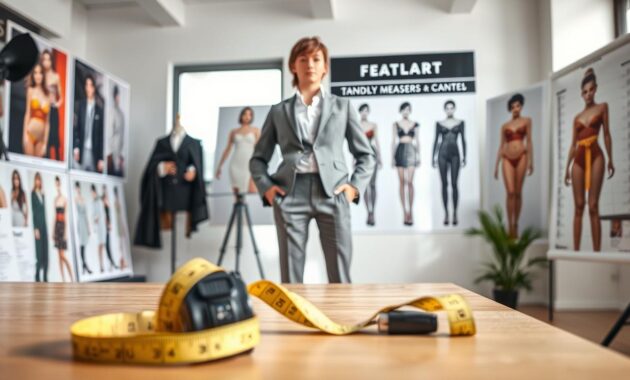
Choosing the Right Lane: Fashion Models, Commercial Models, Plus-Size, Curvy, and People Models
Choosing a lane in this industry is a strategy, not a surrender—your fit with a lane unlocks steady opportunities. I want to help you place your look where it can book repeatedly.
Commercial and advertising modeling
Commercial work is flexible. Women often succeed between ~170–183 cm and men have similar latitude. Brands hire for personality and product connection more than runway proportions.
Plus-size and curvy
In industry terms, plus-size often maps to EU 38–40. Curvy usually sits around EU 42–44. Agents and casting directors use these labels to match clothing and messaging fast.
People modeling
People models sell real life. Distinctive traits—tattoos, gap teeth, wild hair, or best-ager credibility—become the reason a brand casts you.
What each lane sells: fashion sells silhouette, commercial sells lifestyle, people sells trust. Each lane offers different rhythms and opportunities.
- Do a quick self-audit: note height, typical clothing fit, and a signature feature.
- Match submissions to the lane that fits those facts.
Your Look Is Your Product: Building a Distinctive, Bookable Appearance
Treat your appearance like a product—clear, repeatable, and easy to describe. That single idea changes how you prepare for castings and campaigns. I want you to pick one memorable detail and make it consistent.
Find and highlight your signature feature
Ask: what will someone remember thirty seconds after you leave the room? It could be freckles, a gap, a brow, or a strong profile. Choose one and style around it.
Consistent cues sell: a hair part, a grooming pattern, and minimal makeup that reads well on camera. Agencies describe a person faster when they can name one trait.
Posing and facial control that sell designers’ vision
Practice simple drills in natural light: slow head turns, soft jaw drops, and steady eye focus. Test angles, note which side reads cleaner, and repeat until it feels natural.
Remember: designers hire faces that lift a concept, not a single pose. Your job is to serve the clothes and the idea with reliable expression and small, polished habits—clean nails, hydrated skin, and consistent grooming.

Digitals and Portfolio Basics: What to Submit to Agencies (and What to Avoid)
Your digitals should be a straightforward snapshot of who you are on set—no filters, no fiction. Honestly, agencies value honesty because clients hire the person they meet, not an edited version.
Essential digital set
- Clean face close-up (no makeup), front-facing.
- Profile and three-quarter head shots.
- Full-body front, side, and back in natural light.
- Neutral background; minimal props.
What to wear
Choose fitted basics so your body reads clearly: a plain fitted top, clean jeans or leggings, and simple shoes. Avoid heavy styling, oversized coats, or bold prints that hide proportions.
When pro photos help — and when they hurt
Professional shoots add value after you have clean digitals. They help for campaigns and comp cards. They hurt when heavy retouching or dramatic lighting changes your baseline look.
Keep your book current
Update digitals every 3–6 months or after weight or hair changes. Make sure filenames include your name and date, include current stats, and never send group photos.
Getting Signed Safely: Finding a Legit Modeling Agency and Skipping Scams
Finding representation is part research, part intuition. I advise you to slow down and check facts before signing. A clear roster and public bookings tell you if an agency actually places people like you.
How to research and match roster fit
Look for clients listed on the agency site, recent booking announcements, and photos that match your look. If their book shows many versions of your type, your chances shrink unless you have a distinct angle.
Major red flag: upfront fees for “required” packages
Beware of any agency that demands payment for a “required” portfolio or training package. Reputable agencies earn via commission after you book. High-pressure sales or rushed contracts are classic scam patterns.
What strong representation looks like
- Clear positioning: they can describe your lane and why you fit it.
- Real introductions: they connect you to casting directors and clients.
- Good negotiation: they protect your pay and usage rights for jobs.
- Professional boundaries: test shoots are organized, paid or credited, and communication stays formal.
Practical close: an agent doesn’t rescue your career—they build a steady way for a working model to grow. Hold boundaries, ask for references, and never rush a signature.

Skills That Increase Bookings: Professionalism, Presence, and Social Media Strategy
What separates booked people from almost-booked people is often a handful of practical skills. I’ve seen charming faces lose castings because they missed the basics. These skills are simple to learn and high-return.
Set etiquette clients remember
Be early, confirm call times, and keep messages clear. Punctuality shows respect; calm communication keeps a shoot on schedule.
Deliver the same energy from first frame to last. That consistency makes you easier to work with and more likely to be rehired.
Social media as a digital portfolio
Treat feeds like a live comp card: clean digitals, a few editorial frames, behind-the-scenes, and a slice of personality. Keep aesthetics consistent so agents and brands see a reliable product.
Engage thoughtfully—comments and modest interaction signal real reach and professional presence in the industry.
Networking that creates repeat work
Show up prepared to shoots and events. Be easy to work with. Follow up with a short thank-you and usable images. That follow-through turns one job into many.
| Skill | On-set Behavior | Booking Impact |
|---|---|---|
| Professionalism | Arrive early, clear communication | Higher rehire rate |
| Presence | Consistent energy, reliable expressions | Better callbacks |
| Social Feed | Curated content mix, steady aesthetic | Agent and brand discovery |
| Networking | Polite follow-up, share files | Repeat projects and referrals |
Long-term success depends on reputation. Learn these skills, and your presence will do the outreach for you.
Conclusion
Here’s a short, practical wrap-up to turn what you learned into action.
Make a strong, practical plan this week: pick a lane, record accurate stats, update clean digitals, and sharpen basic habits that get you rehired. These steps are small, but they change outcomes fast.
Remember: many standards are logistical—built around sample sizing and client needs. Fighting that noise wastes time. Positioning your look to fit a market wins more work than trying to be everything.
Treat your measurements as business data, not judgment. Trust and consistency sell. Find honest representation that earns when you book, not when you pay. I want you to be unmistakably right for the right client—again and again.
FAQ
What does “top model” really mean in the United States industry today?
Why do agencies prioritize bookability over just being attractive?
How do requirements change by market: runway, editorial, catalog, and commercial?
What height ranges do agencies commonly request for women and men?
Why do designer sample sizes matter at fashion weeks?
What body proportions do clients most often request?
What grooming standards do agencies expect for skin and hair?
How important is having a recognition factor or distinctive feature?
What are typical runway expectations for women in fashion capitals?
What do agencies mean by the “not too muscular” rule for men?
Why can being under or over common height cutoffs be harder?
How should I measure bust/chest, natural waist, and hips accurately?
How do US clothing sizes map to real measurements?
What shoe sizes do clients expect and why does consistency matter?
What do “dream measurements” mean today?
How flexible are standards in commercial and advertising modeling?
How is plus-size or curvy modeling commonly defined?
What is “people modeling” and who books it?
How do I identify and highlight my signature feature?
What posing and facial control should I practice?
What should simple digitals include for agency submissions?
What should I wear so my body shape reads clearly in photos?
When do professional photos help—and when can they hurt?
How often should I update my book for castings, shoots, and campaigns?
How do I research agencies and match their roster to my model type?
What’s a major red flag when choosing an agency?
What does strong representation look like?
What set etiquette helps models get more bookings?
How should I use social media as a digital portfolio?
How can networking with photographers, stylists, and designers create repeat work?

I’m Rodrigo Durães, founder of CareersForge — the world’s leading career platform — and recognized as one of the most comprehensive and experienced career and life coaches globally. With multiple academic degrees from the world’s top universities and over two decades of experience as a CEO, my mission is clear: to help people unlock their full professional potential through honest, strategic, and proven content.