
Ever wonder why some candidates walk into interviews radiating confidence while others fidget nervously? It’s not just experience—it’s the silent power of strategic outfit choices. In today’s evolving workplaces, “casual” doesn’t mean careless. Your clothes send signals before you speak.
First impressions form in seconds. A polished yet relaxed look bridges professionalism and authenticity. But here’s the challenge: too formal feels stiff, while too laid-back risks seeming unprofessional. The sweet spot? Outfits that mirror a company’s culture without losing your personal edge.
We’ve seen candidates lose opportunities over mismatched shoes or wrinkled shirts. Details matter. A crisp light-colored dress shirt, tailored trousers, and clean footwear create a foundation. Add a subtle tie or minimalist accessories to elevate without overdoing it.
This guide reveals seven unspoken rules for crafting interview-ready casualwear. You’ll learn how to align with workplace expectations, highlight your strengths, and project competence through fabric, fit, and color. Let’s build an outfit that works as hard as you do.
Table of Contents
Understanding the Interview Environment
Decoding the interview setting starts long before you pick an outfit. The space where you’ll sit across from hiring managers demands alignment between your appearance and their expectations. Three out of five recruiters say candidates who mirror workplace aesthetics advance faster in hiring processes.
Recognizing Company Culture and Dress Code
Start with the company’s LinkedIn page. Employee photos often reveal unspoken dress norms—note collar styles, footwear, and color palettes. For startups, rolled-up sleeves and untucked shirts might dominate. Corporate offices? Think tailored separates in neutral tones.
When in doubt, call HR. A simple “Could you describe your office attire?” shows initiative. We’ve seen candidates gain insider insights this way, like learning a tech firm prefers dark jeans over khakis.


| Dress Code | Key Elements | Best For |
|---|---|---|
| Formal | Full suits, silk ties | Law, finance |
| Business | Blazers + dress pants | Consulting, management |
| Casual | Collared shirts, clean sneakers | Tech, creative roles |
Balancing Professionalism with a Casual Vibe
Elevate basics with one strategic layer. A navy unstructured blazer over a cotton shirt says “I respect your time” without stiffness. Dark denim with precise tailoring works better than baggy chinos in creative fields.
Color psychology matters here. Soft blues project calm competence, while charcoal grays suggest reliability. Avoid loud patterns—they distract during crucial conversations.
Remember: Your clothes should whisper “capable,” not shout “trying too hard.” A barista turned project manager landed his role by pairing a heather-gray polo with slim wool trousers. The hiring team later praised his “authentic polish.”
Psychology of Color Your outfit sends a message, but so does the color you choose. Learn which shades boost your chances in our guide on Best Colors to Wear for a Casual Job Interview.
After You Get Hired: Once you land the job, the rules might change slightly. Prepare yourself with our guide on Dos and Don’ts of Men’s Office Attire. or see mor on Whats businees casual
Crafting Your Job Interview Outfit
Building an interview-ready look starts with foundation pieces that speak louder than words. We’ll break down how to assemble clothing that combines comfort with authority—without feeling like a costume.
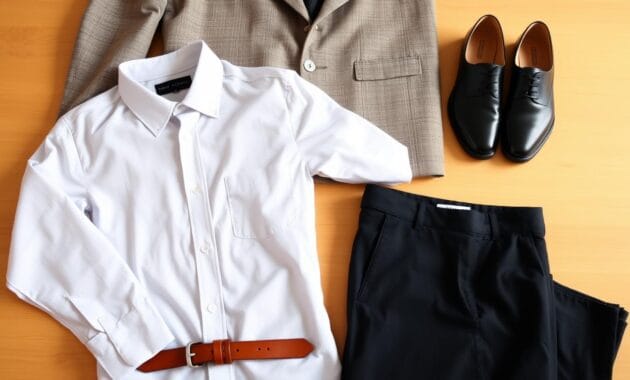
Selecting the Ideal Dress Shirt and Trousers
Begin with a medium-weight cotton dress shirt in pale blue or white. These hues minimize sweat visibility and pair well with most skin tones. Avoid slim cuts that restrict movement—aim for a fit where fabric skims your torso without pulling.
Pair it with trousers that balance structure and ease. Wool-blend dress pants in charcoal or navy work for formal settings, while tailored chinos in olive or taupe suit creative environments. Hemlines should graze the top of your shoes—no bunching.
| Formality Level | Shirt Style | Trouser Match |
|---|---|---|
| High | Non-iron cotton | Wool dress pants |
| Medium | Oxford button-down | Structured chinos |
| Low | Linen-cotton blend | Dark denim |
Choosing Between a Jacket, Blazer, or Sport Coat
A navy unstructured blazer instantly elevates casual outfits for tech or startup interviews. For corporate roles, opt for a matching suit jacket—but leave the tie if the dress code allows. Sport coats in herringbone or tweed add texture without formality.
Here’s a quick rule: Match the jacket’s formality to the company’s LinkedIn photos. Saw employees in sweaters? Skip the suit. Noticed tailored separates? Add a jacket with minimal shoulder padding.
| Layer | Best Use | Fabric Tip |
|---|---|---|
| Suit Jacket | Finance/Law | Super 120s wool |
| Cotton Blazer | Tech/Creative | Breathable twill |
| Linen Sport Coat | Startups | Wrinkle-resistant |
what to wear to a job interview male casual: Styling Essentials
Your style speaks before you do—here’s how to make every hue and hemline work in your favor. Strategic color coordination and precise tailoring transform casualwear into career armor. Let’s refine your approach to textures and proportions while staying true to workplace norms.
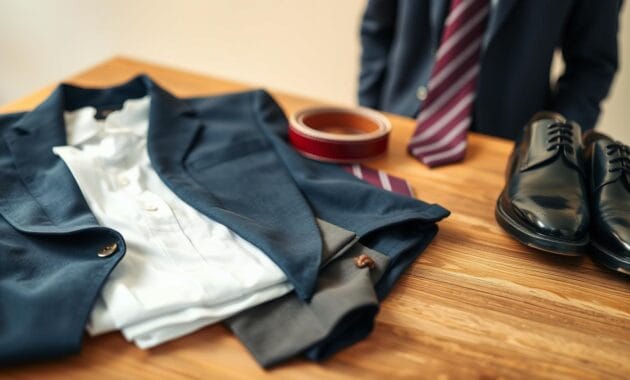
Expert Tips on Color Coordination and Fit
Start with skin tone compatibility. Cool undertones pair well with navy and charcoal, while warmer complexions shine in olive or camel. For creative roles, add a single accent color in pocket squares or socks—think burgundy in tech or sage green for design roles.
Avoid boxy silhouettes. Shirt sleeves should end at the wrist bone, and trouser breaks must be minimal. A client once landed a leadership role by opting for a slightly tapered shirt that highlighted his athletic frame without restricting movement.
| Skin Tone | Best Colors | Formality Level |
|---|---|---|
| Cool | Navy, Gray | High |
| Warm | Camel, Olive | Medium |
| Neutral | Charcoal, White | All |
Incorporating Business Casual Trends Effectively
Modern workplaces reward subtle innovation. Try a textured blazer in hopsack weave over a crisp white shirt—it’s relaxed yet boardroom-ready. We’ve seen professionals gain traction using patterned socks that peek above loafers, creating interest without distraction.
Balance is key. Pair traditional wool trousers with a stretch-knit tie, or team a linen shirt with structured trousers. One marketing director impressed hiring managers by combining a lightweight merino sweater with tailored chinos—proof that comfort and polish coexist.
| Traditional Element | Modern Twist | Impact |
|---|---|---|
| Dress Shirt | Hidden Button Collar | Subtle Sophistication |
| Leather Shoes | Textured Rubber Soles | Updated Professionalism |
| Belt | Matte Finish Buckle | Contemporary Edge |
Fabrics make silent statements. Lightly starched cotton maintains sharp collars through back-to-back meetings, while moisture-wicking blends prevent visible stress marks. Remember: Your attention to stitch lines and seam finishes signals the same care you’ll bring to projects.
Accessorizing for a Confident Look
The right accessories act as silent collaborators in your interview narrative. Three carefully chosen pieces can shift perceptions from “prepared” to “exceptional” without saying a word. Research shows 78% of hiring managers notice coordinated details like matching leathers before the first handshake.
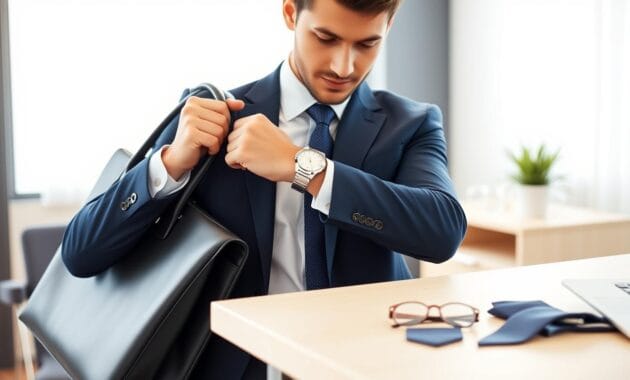
Strategic Pairing: Tie, Watch, Belt
Start with a silk tie in muted stripes or microdots—these patterns work in both tech startups and corporate environments. Pair it with a leather belt matching your shoe color. A client recently aced a senior role by choosing a matte brown belt with matching Oxfords, creating seamless cohesion.
Watches should whisper reliability. Stick to clean faces with minimal complications. A stainless steel timepiece or leather-strap classic says “punctual professional.” Avoid smartwatches unless interviewing at wearable tech companies.
| Accessory | Purpose | Example |
|---|---|---|
| Tie | Adds formality anchor | Navy grenadine silk |
| Belt | Completes silhouette | Full-grain leather |
| Watch | Signals timeliness | Silver dress watch |
Less Is More: The Minimalist Edge
Limit accessories to three focal points. A textured tie, slim belt, and understated watch create harmony. Skip pocket squares unless applying for creative leadership roles—they can overshadow verbal answers.
One tech recruiter shared: “Candidates wearing cufflinks often overcompensate. We prefer polished shoes and a quality folio instead.” Focus on functional elegance—a leather portfolio holds resumes while complementing your belt.
Remember: Your belt buckle should never compete with your eye contact. Keep metals consistent—silver watch? Silver buckle. This attention to unified details builds subconscious trust during decision-making conversations.
Style Note: For creative industries, the rules of fit are relaxing. We are seeing a surge in looser, more comfortable tailoring inspired by power dressing. To understand this silhouette better, look at the Oversized Blazer Trend, which projects confidence through volume—a concept that’s reshaping modern professional wear.
Grooming and Personal Presentation
Your final touchpoint isn’t the outfit—it’s the polish you bring to every detail. Studies show 63% of hiring managers reconsider candidates with unkempt hair or wrinkled clothing, even if their qualifications align. Grooming bridges the gap between “qualified” and “ready to lead.”

Ensuring a Neat Haircut and Facial Grooming
Book a trim 3-4 days pre-interview—fresh enough to impress, settled enough to look natural. For facial hair, define clean lines with precision trimmers. A client recently secured a management role after switching from a 5 o’clock shadow to a sharp, maintained beard that framed his jawline.
| Grooming Element | Preparation Tip | Impact |
|---|---|---|
| Haircut | Schedule 72h before | Fresh yet natural |
| Beard/Mustache | Trim to 0.5” max | Professional edge |
| Skincare | Hydrate + mattify | Confidence boost |
Ironing and Starching for a Polished Finish
Steam dress shirts inside-out to preserve collars. Use light starch on cotton for structure without stiffness. One candidate’s crisp white shirt caught attention in a tech startup interview—the CEO later noted it signaled “discipline meets innovation.”
Inspect suits for loose threads. Polish shoes to mirror-like shine—they’re the first detail interviewers notice when you stand. Pair these efforts with a well-maintained watch and clean nails to complete the narrative of meticulous care.
Remember: Every pressed seam and groomed hairline whispers “I respect this opportunity.” Your appearance isn’t vanity—it’s visual proof of how you’ll handle workplace responsibilities.
Expert Advice and Real-World Examples
Career coach Martin Yate once noted: “The best-dressed candidates aren’t wearing clothes—they’re wearing solutions.” This truth plays out daily across industries. A financial analyst landed a fintech role by swapping his traditional suit for a navy blazer and dark jeans, mirroring the startup’s “polished but agile” ethos.

Insights from Professional Interview Sources
HR leaders reveal three non-negotiable rules: Clean lines beat trends, fabric quality signals attention to detail, and color coordination shows strategic thinking. Tech recruiter Sarah Chen shares: “I recommended a candidate who wore charcoal chinos with a light knit sweater—it said ‘innovative’ without trying too hard.”
Consider these adjustments from industry pros:
- Swap ties for textured pocket squares in creative fields
- Pair wool trousers with leather sneakers for hybrid roles
- Use watches with slim profiles to avoid bulk under cuffs
You only have a few seconds to make a lasting impact. Studies on first impressions show that people judge competence and trustworthiness almost instantly based on visual cues, including your attire.
Adapting Outfit Ideas for Different Settings
A marketing director aced a Fortune 500 interview by layering a cashmere V-neck over a dress shirt—corporate polish with approachability. Contrast this with a UX designer’s success story: tailored black jeans and an untucked linen shirt secured his position at a design-first agency.
| Industry | Key Piece | Outcome |
|---|---|---|
| Finance | Mid-gray suit (no tie) | Promoted to VP |
| Tech | Structured bomber jacket | Landing Lead Role |
| Healthcare | Navy trousers + crisp white shirt | Fast-tracked Hire |
Remember: Your clothing choices should answer the question hiring managers secretly ask: “Can I see this person representing our brand?” A slight sleeve roll or perfectly fitted blazer often speaks louder than resume bullet points.
Business Casual for Interviews: Look Sharp Without Overdoing It
You don’t want to underdress. You don’t want to look like you’re headed to a wedding either. The goal is a clean, sharp professional appearance that gives off the right sense of professionalism.
Most guys overthink this and show up in full formal attire when the company runs on a casual dress code.
What’s the Safest Choice?
Let’s not make this complicated. The safest option for most types of interviews is this:
- A classic dress shirt or button-up shirt
- Khaki pants or a pair of slacks
- Minimal shoes in brown or black
- Stick to solid colors or classic colors like white, light blue, or grey
- Bring a sports jacket if the place leans closer to business professional
Want to play it safe for a formal business setting? Swap chinos for dress slacks, keep everything crisp, and add cuff links if you’re wearing a long sleeve dress shirt.
Avoid bright colors, busy patterns, and collarless shirts. These kill your chances before the handshake.
While this guide focuses specifically on the male casual aesthetic, if you need a broader understanding of interview grooming and etiquette, check out our essential overview on How to Dress for a Job Interview.
For Virtual Interviews, You Still Need to Show Up Right
A video interview isn’t a pass to wear joggers and a tee. You’re still making a strongest impression, even through the screen.
Here’s how to keep it clean:
- Stick with a polo shirt or button-up shirt in a basic color
- Neutral colour tones like navy, white, beige, or light grey always work
- Avoid bright colors or patterns that distract
- Sit somewhere well-lit with no mess in the background
- From the waist down? Still wear pants. You never know when you’ll need to stand up.
This is your shot at the dream job. Show that you’ve done your interview preparation—starting with what you wear.
Adjust Based on Industry and Role
Every sector has its own style rules. Know your audience.
For Creative Industries
Think advertising, design, fashion—places with a relaxed dress code.
- A smart casual shirt
- Fitted blue jeans
- Clean shoes
- Maybe a subtle pattern for some personal expression
Still keep it tasteful. You’re not out with mates—you’re showing you’re a polished professional who “gets it.”
For Traditional Roles
If the job is in finance, law, or a corporate office, stick to the acceptable dress code—more on the formal dress codes side.
- Stick with solid colors, no logos
- Think classic colors and lighter colors
- A sports jacket or blazer helps if the weather’s right
- No sneakers, no casual attire
This is where dressing too relaxed will backfire.
Cold Weather? Adjust the Materials, Not the Look
During the colder months, you don’t need to compromise the look—just the fabrics.
- Swap your shirt for a fine merino wool layer
- Use thicker weaves on jackets
- Keep everything fitted, warm, and neutral
Still stick with the same clothing items—just upgrade the fabric weight.
Keep the Outfit Simple and Professional
Want to know what actually leaves a positive impression?
Simplicity. Fit. Awareness.
The outfit simple rule almost always wins:
- Neutral top
- Tailored bottom
- Minimal accessories
- One standout piece (watch, belt, or shoes)
You don’t need to flex. Just be intentional. You’re trying to land the job, not start a fashion blog.
The right casual job interview outfit balances your style with company culture. And when in doubt, always dress one notch above the typical dress code.
Conclusion
Your interview attire is more than fabric—it’s a strategic career tool. We’ve explored how tailored chinos beat baggy jeans, why leather shoes outclass sneakers, and how a crisp shirt elevates basic layers. These choices build silent credibility before you speak.
Remember: Business casual thrives on balance. A structured blazer over dark denim demonstrates adaptability. Minimalist watches and clean belts signal professionalism without stiffness. Each element works together like a well-rehearsed team.
Refresh your wardrobe seasonally as roles evolve. That charcoal jacket pairing with olive chinos today might need linen textures for tomorrow’s startup pitch. Your clothing should grow with your ambitions.
Walk into that meeting knowing you’ve mastered visual persuasion. Check collars for sharpness, trouser hems for precision, and accessories for cohesion. Then breathe deep—you’re not just dressed for the job, you’re dressed to lead it.
Ready to transform first impressions? Open your closet. Apply these insights. Step forward with the quiet confidence of someone who understands exactly how details shape destinies.
FAQ
Can I wear jeans to a casual job interview?
Is a tie necessary for business casual interviews?
What shoes pair best with casual interview outfits?
Should I avoid certain colors in casual interview attire?
How do blazers differ from sport coats in casual settings?
What grooming details do hiring managers notice most?
Can I incorporate personal style without looking unprofessional?

I’m Rodrigo Durães, founder of CareersForge — the world’s leading career platform — and recognized as one of the most comprehensive and experienced career and life coaches globally. With multiple academic degrees from the world’s top universities and over two decades of experience as a CEO, my mission is clear: to help people unlock their full professional potential through honest, strategic, and proven content.